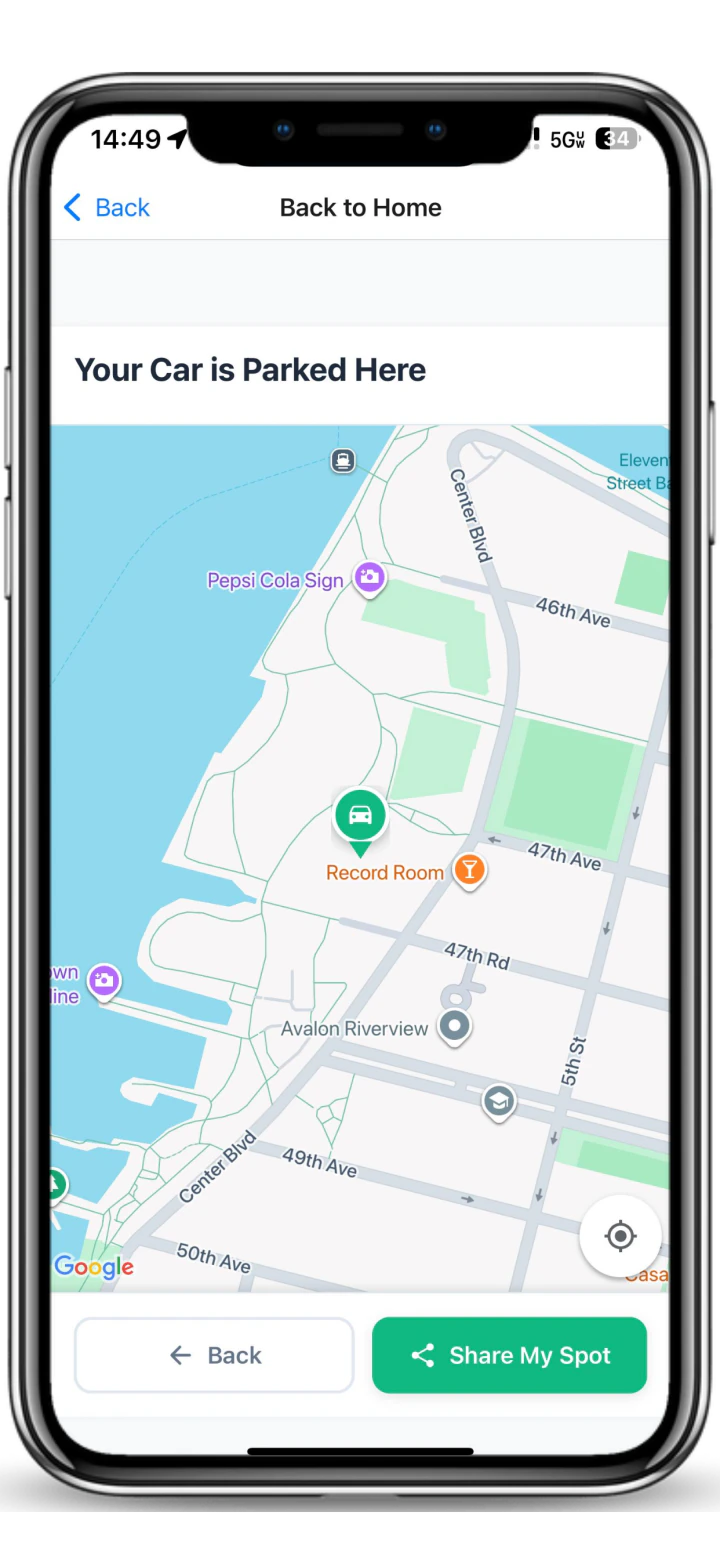
Share a Parking Spot With Someone You Trust
Sharing a parking spot with someone you trust means privately sending the exact location where your car is parked. It removes confusion, saves time, and avoids the stress of vague directions or missed pickups.
This page explains what trusted parking spot sharing means, when to use it, and why privacy and control matter.
Quick Answer
You can share your parking spot by sending your parked location directly to a trusted person. The location is private, intentional, and not visible to the public.
- CurbAI™ helps confirm curb rules where the car is parked.
- Ticket Guard™ alerts drivers before time-based parking rules begin.
- Private sharing focuses on coordination, not exposure.
What It Means to Share With Someone You Trust
Sharing a parking spot with someone you trust is a deliberate action.
You decide:
- Who receives the location
- When it is shared
- How long it remains relevant
The information is not public and is not automatically broadcast.
When Trusted Parking Spot Sharing Is Useful
This feature is commonly used when:
- A family member is picking up the car
- A partner needs to find the vehicle later
- You’re meeting someone in a busy area
- You parked in a large or unfamiliar neighborhood
Clear sharing avoids confusion in environments where landmarks are unreliable.
How Sharing Your Parking Spot Works
1. You Park Your Vehicle
You arrive and park normally.
2. You Choose to Share
You select the option to share your parked location.
3. You Send It to a Trusted Person
The location is sent directly to someone you choose.
4. They Navigate Directly to the Car
The recipient can navigate straight to the vehicle without guessing.
Why Parking Directions Often Fail
People often describe parking locations using:
- Nearby intersections
- Landmarks that look similar
- Memory-based directions
In dense cities, these methods frequently lead to missed connections and repeated calls.
Privacy and Control Come First
Trusted parking spot sharing is designed around consent.
Sharing your parking spot:
- Is not visible to other drivers
- Does not track you continuously
- Does not share information without your action
You stay in control at all times.
Trusted Sharing vs. Public Parking Signals
These features serve different purposes.
- Sharing your parking spot is private and used for coordination
- Sharing a departure is public, anonymous, and helps others find parking
One helps people find a car. The other helps drivers find parking.
Why This Matters in Urban Mobility
Urban mobility depends on clear coordination.
When people can find vehicles easily:
- Pickups are faster
- Waiting time is reduced
- Street congestion decreases
Small coordination improvements scale across the city.
Designed for Everyday Use
Trusted parking spot sharing isn’t a special case feature.
It’s built for everyday scenarios that happen constantly in cities.
Simple, intentional sharing makes urban movement smoother.
Final Thoughts
Sharing your parking spot with someone you trust should feel safe and effortless.
Spotlink provides a clear, private way to coordinate without stress or confusion.
It’s a small feature that solves a problem people experience every day.
FAQ
Is sharing my parking spot public?
No. The location is only sent to people you choose.
Can I stop sharing at any time?
Yes. Sharing is intentional and not continuous.
Is this the same as sharing a departure?
No. Sharing a departure is public and helps other drivers find parking.
Does Spotlink track my location?
No. There is no ongoing tracking unless you share again.
Why is trusted sharing better than texting directions?
Because it removes guessing and sends the exact location instantly.