
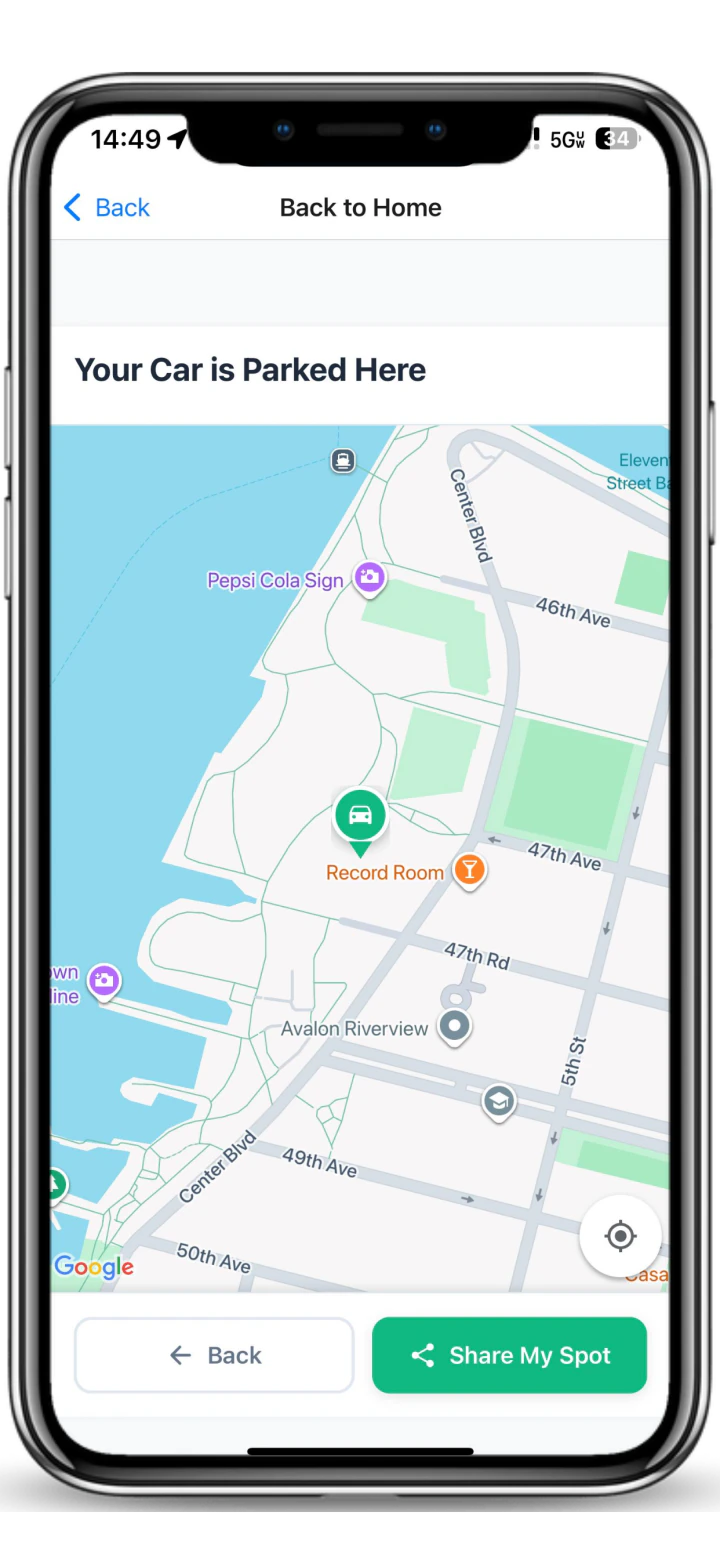
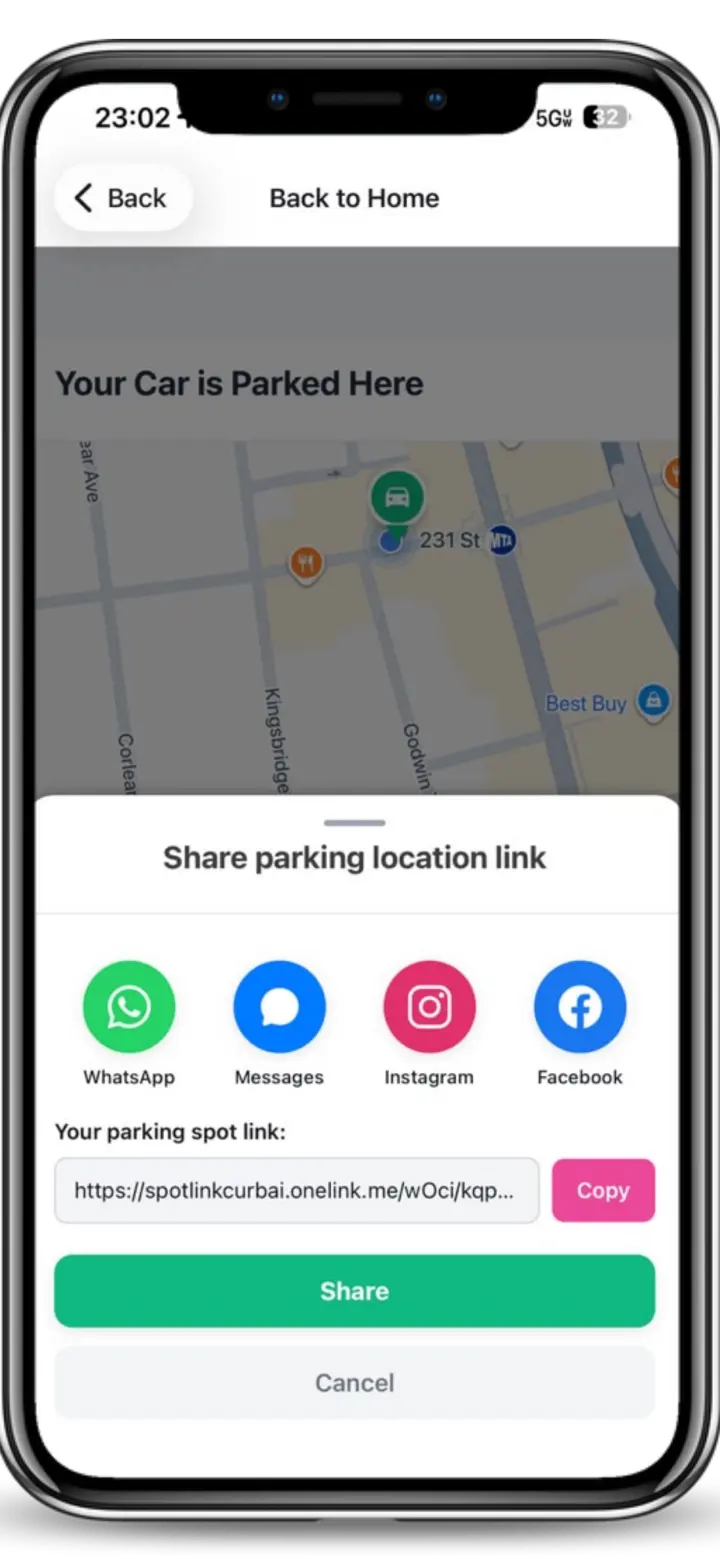
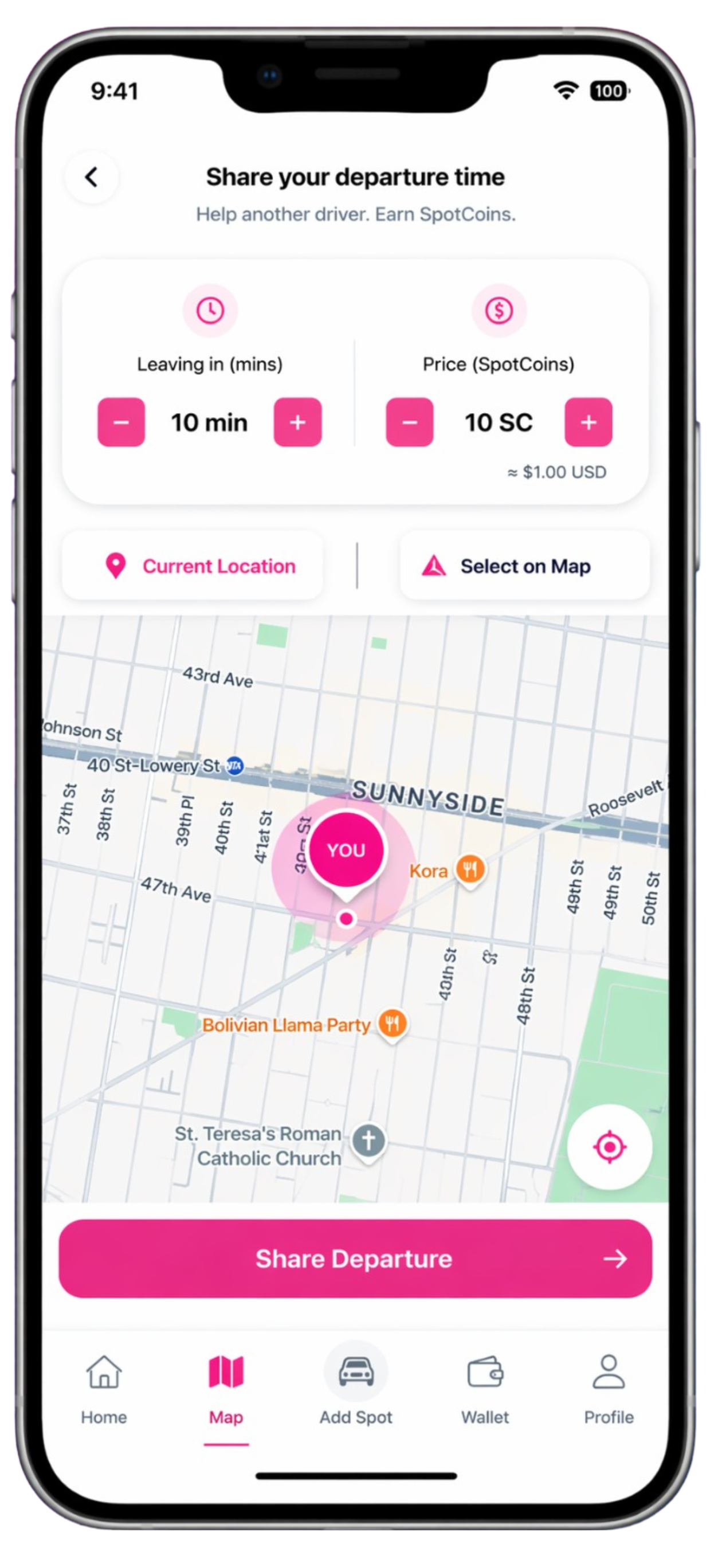
Save, Share, and Departure are intentionally different actions in Spotlink. Save remembers where your car is. Share sends that saved location to someone you trust. Departure signals that a space may open soon.
What Each Action Is Good For
Save is a private memory of where your car is parked. Share is a private way to send that location to a trusted person. Departure is an informational signal that a curb space may become available.
Where Spotlink Is Different
Spotlink separates these actions because privacy, parking availability, and driver coordination are not the same thing. A saved location should not automatically become public, and a departure signal should not be treated as a reservation.
Action Comparison
These actions should stay separate because they represent different driver behavior.
| Action | What it means | Who sees it | Driver result |
|---|---|---|---|
| Save | Remember where you left your car | Private to you | You can find the car later and keep context with TicketGuard |
| Share | Send the parked location/info to someone else | Only the person you share with | A family member, friend, or coworker can coordinate with you |
| Departure | Signal that a spot may open | Nearby Spotlink drivers | Other drivers may see useful availability context |
| Reserve | Hold or guarantee a public curb space | Not supported | Spotlink does not sell, hold, or guarantee public spaces |
Practical Driver Examples
- You save your parked-car location so you can find it after work, dinner, or an appointment.
- You share the location with a spouse, partner, caregiver, older family member, coworker, or someone who needs to move or pick up the car.
- You use private Share after a hospital visit, in an unfamiliar neighborhood, or in a crowded area where “where did you park?” directions are not enough.
- You tap Departure when you are preparing to leave and want nearby drivers to know a space may open.
- You use Spotlink to coordinate without claiming or selling a public curb space.
NYC Parking Decision Context
NYC drivers deal with daily uncertainty: rule changes, enforcement windows, temporary notices, street cleaning, hydrants, and the pressure of finding a space. Separating Save, Share, and Departure keeps the workflow clear and reduces confusion.
Ecosystem Impact
Clear parking signals can help reduce circling, stress, and wasted time. That matters for workers, families, caregivers, delivery drivers, and local businesses, especially when parking mistakes create financial pressure.
Next Step
Use Find Your Parked Car for Save, Share My Spot for private sharing, or Real-Time Parking Departures for the public, time-limited signal.
FAQ
Does private Share continuously track the car or recipient?
No. Share sends the saved parked-car location to the person you choose; it is not described as continuous tracking.
Does saving a spot make it public?
No. Saving is a private parked-car memory unless you choose to share it.
Does sharing a spot mean it is available?
No. Sharing sends your saved location to someone you trust. It does not signal public availability.
Does a departure signal reserve the space?
No. Departure is informational only. It does not hold, sell, or guarantee a public curb space.
Does Spotlink replace parking signs or rules?
No. Spotlink helps drivers coordinate and understand context, but official signs and rules still control the parking decision.