You don’t get fined because you’re careless.
You get fined because parking rules are layered, conditional, and change faster than the signs explaining them.
If you’re here, you’re probably asking one question:
“Can I park here right now without getting a ticket?”
This guide answers that — clearly, step by step.
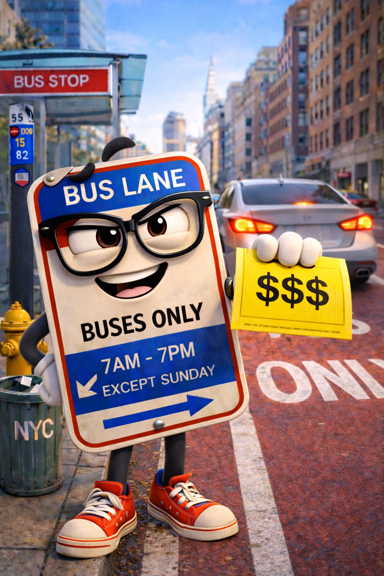
Quick Answer (Read This First)
You can park legally only if all of the following are true at the same time:
No sign on your side of the street forbids parking right now
No temporary rules override permanent signs
The curb itself allows stopping (paint, hydrants, bus stops)
Time-based rules match the current day and hour
Nothing changed recently that you didn’t see
Miss any one of these, and you’re likely getting fined.
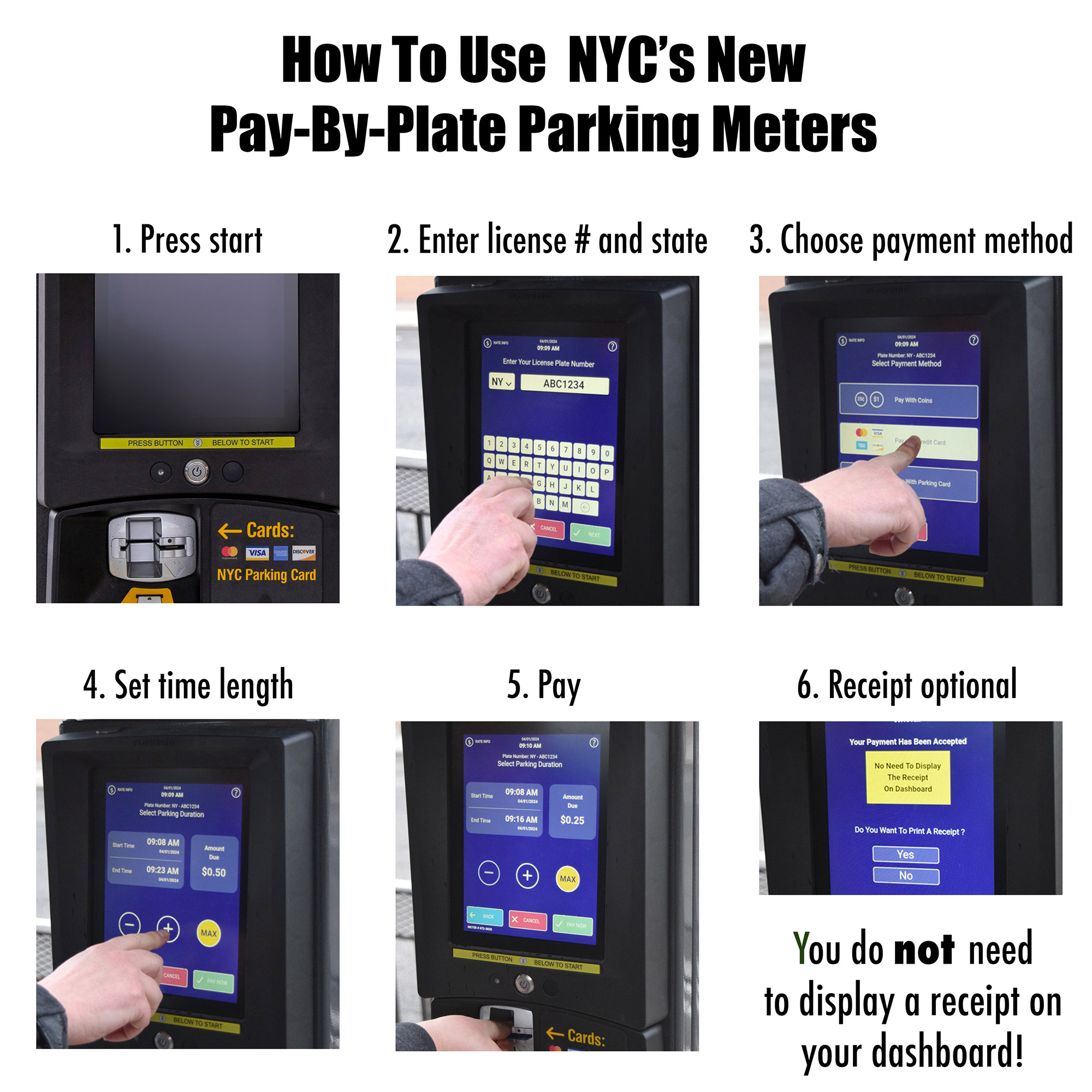
Why Parking Rules Are So Confusing
Parking rules aren’t written for drivers — they’re written for enforcement.
On a single block you can have:
Multiple signs on one pole
Arrows pointing in different directions
Rules that only apply certain days
Time windows stacked on top of each other
Temporary signs posted hours ago
The result?
Drivers guess. Enforcement doesn’t.
The Real Question Drivers Ask
Drivers don’t ask:
“What does this sign say?”
They ask:
“Can I stop here right now without getting fined?”
That question depends on time, place, and current conditions — not just what’s bolted to the pole.
Step-by-Step: How to Decide If You Can Park
Step 1 — Check Every Sign on Your Side of the Street
Not just the closest one.
Look for:
“No Parking”
“No Standing”
“No Stopping”
Arrows showing direction and range
If any sign applies to your location during the current time window → don’t park.
Step 2 — Look for Time & Day Rules
Many rules only apply:
Certain days (street cleaning, school days)
Certain hours
Seasonal periods
Always confirm:
Day of the week
Time right now
Whether the rule is currently active
Step 3 — Watch for Temporary Restrictions
Temporary signs override everything.
Common causes:
Construction
Moving permits
Filming
Events
Utility work
If a temporary sign exists, assume it wins — even if it was posted recently.
Step 4 — Check the Curb Itself
Even if signs allow parking, the curb might not.
Never park:
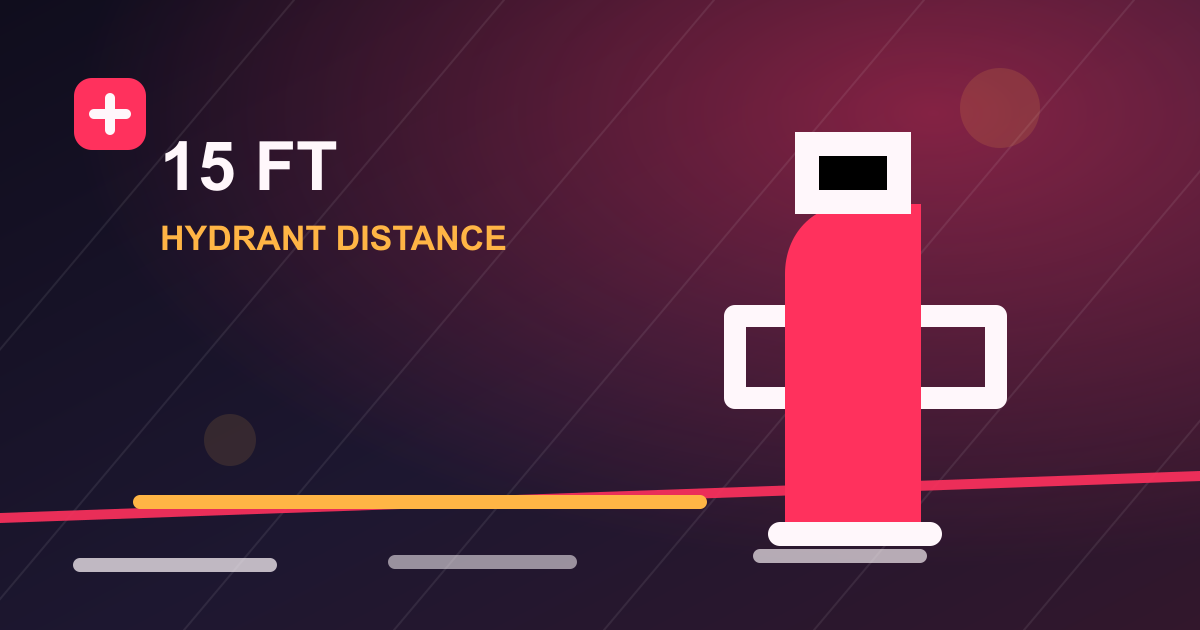
Within 15 feet of a fire hydrant
At bus stops
In crosswalks
Near driveways
On colored curbs that restrict stopping
Paint counts. Always.
Step 5 — Assume Enforcement Knows More Than You
This is the uncomfortable truth.
Enforcement officers:
Know which rules changed today
Know which blocks generate tickets
Operate on current instructions, not static signs
Drivers don’t get that information — unless they check elsewhere.
🛒 Recommended Driver Gear
Common Mistakes That Get People Fined
Reading only one sign
Ignoring arrows
Forgetting temporary rules
Assuming “everyone else parked here, so it’s fine”
Parking right before a rule change
Trusting memory instead of current conditions
Tickets aren’t random. They repeat where confusion repeats.
How Drivers Actually Avoid Getting Fined
The only strategy that works consistently is knowing:
What applies right now
What changed today
What other drivers just experienced on that block
Static signs can’t do that. Guessing definitely can’t.
That’s why tools that show real-time curb rules and alerts matter.
Tools That Help Before You Park (Not After)
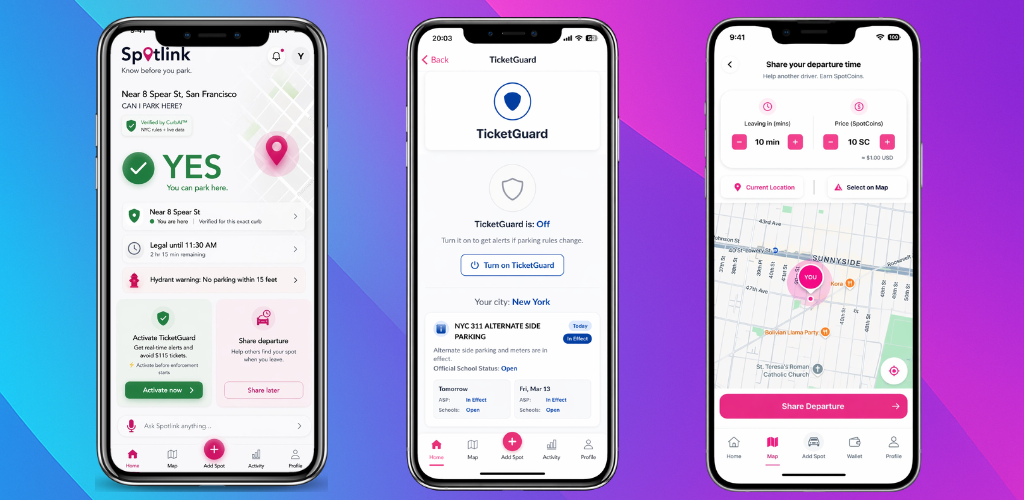
Spotlink
Check curb conditions before you stop.CurbAI
Understand parking signs and rules in context.Ticket Guard
Get alerts when rules change so you don’t learn the hard way.
These exist to answer the question signs don’t.
Final Thoughts
Parking shouldn’t feel like gambling.
If you’re getting fined, it’s usually not because you ignored the rules — it’s because the rules weren’t clear when you needed them.
The moment you stop guessing, tickets stop feeling inevitable.
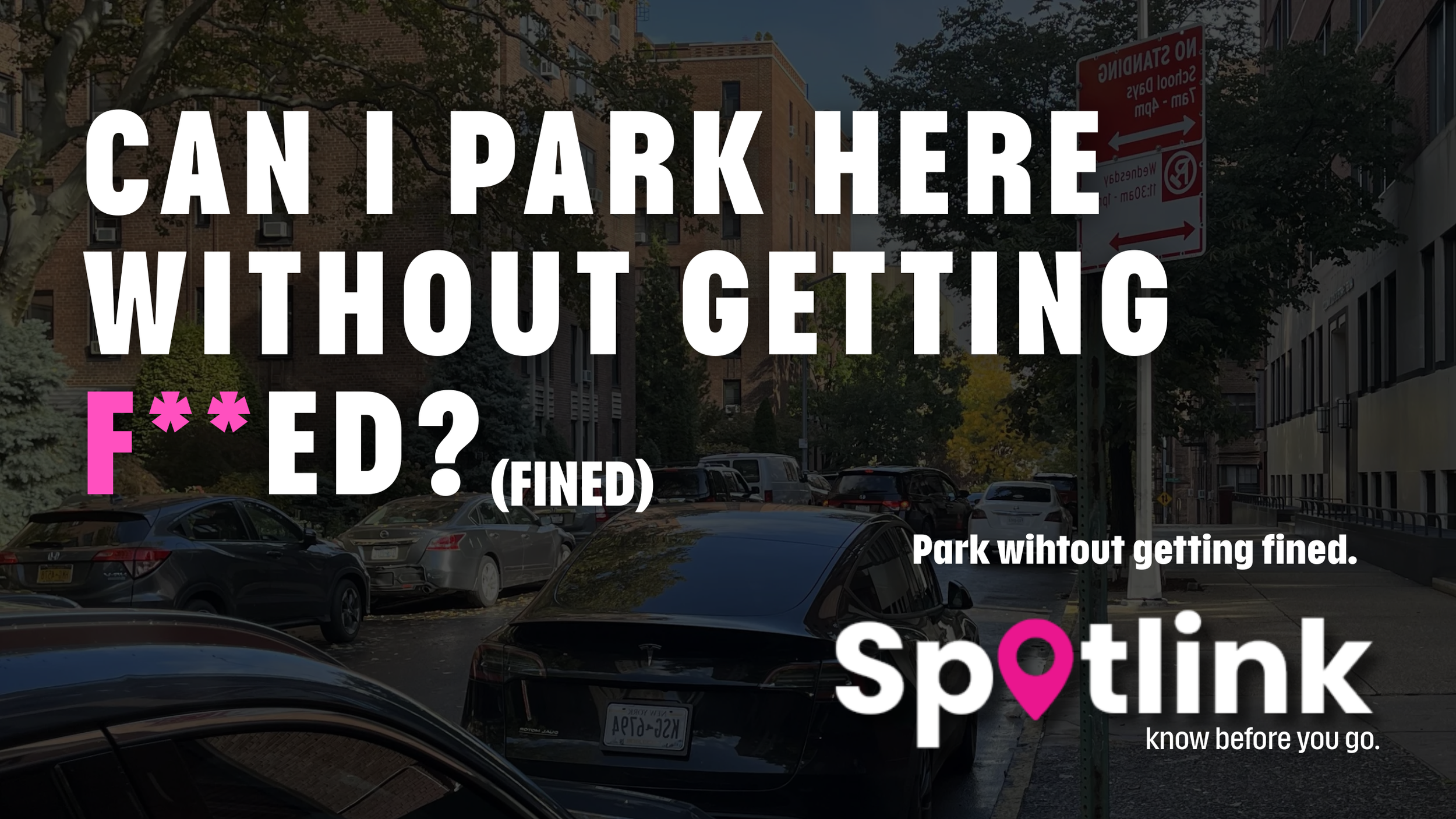
That’s how you avoid getting F**NED.
FAQ
Is it legal to park if signs conflict?
No. If signs conflict, enforcement typically follows the most restrictive active rule.
Do temporary signs really override permanent ones?
Yes. Temporary rules take priority, even if posted recently.
How far from a fire hydrant can I park?
At least 15 feet in NYC, regardless of signs.
Why do tickets cluster on certain blocks?
Because confusion is predictable — and enforcement follows patterns.
Can apps really help avoid tickets?
Yes, if they reflect real-time conditions instead of static maps.
Ready to stop guessing?
You don’t need more apps.
You need better signals.
Spotlink helps people understand what’s happening on the street — and lets everyday driving moments add up.
👉 Try Spotlink
👉 Ask Before You Park
Driver check before parking
What it means
The practical question is whether the curb rule, timing, and street context still allow the driver to stop, wait, or park at that exact moment.
When the rule applies
Check the posted days and hours, the side of the street controlled by the sign, and whether a temporary notice or nearby restriction changes the normal rule.
Common mistake
The common mistake is trusting memory, another parked car, or a quick errand instead of reading the current block conditions.
Quick rule
If the sign, arrow, time window, or curb context is unclear, treat the space as risky until you verify the rule.
What to check
The exact sign and arrow that control the space.
The day, hour, vehicle type, and whether stopping, standing, loading, or parking is allowed.
Hydrants, bus stops, driveways, loading zones, meters, bike lanes, and temporary notices nearby.