
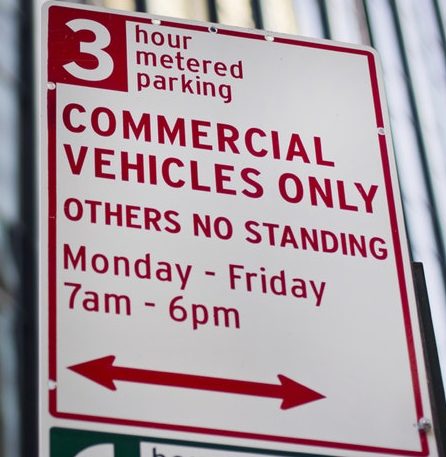
No Standing in NYC: General Rule, $115 Fine & Examples
Direct answer: Under NYC's general No Standing rule, you cannot park or wait at the curb—even if you stay in the car or turn on your hazard lights. You may stop only long enough to pick up or drop off passengers promptly, unless another posted restriction prohibits that stop. You may not load or unload packages or merchandise.
The exact sign still controls. Bus stops, taxi stands, hotel zones, truck-loading zones, authorized-vehicle areas, school zones, and other specialized restrictions can use different rules, violation codes, and fines.
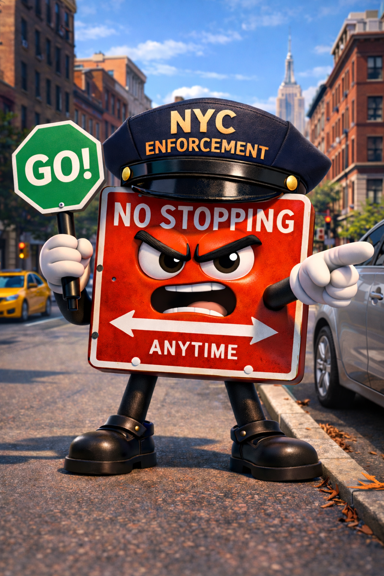
Driver impact
Typical violation: NYC Department of Finance code 14, General No Standing.
Current base fine: $115 citywide for code 14.
NY DMV points: 0. NY DMV does not assign driver-license points for parking violations.
Other consequence: The vehicle may be towed. NYC treats the city as a tow-away zone, and NYPD lists No Standing among parking conditions that can lead to a tow.
A No Standing ticket is still a financial and enforcement problem even though it adds no license points. A single code 14 ticket does not mean every vehicle is automatically towed, but remaining at a restricted curb creates that additional risk.
What you can and cannot do
| Action | General No Standing |
|---|---|
| Wait at the curb | No |
| Stay in the driver's seat and wait | No |
| Pick up or drop off a passenger promptly | Yes* |
| Load or unload packages or merchandise | No |
| Park and leave the vehicle | No |
* The passenger stop must be expeditious and remains subject to the exact posted restriction and every other applicable rule.
Three real-world examples
Passenger already at the curb
You pull over, your passenger gets in promptly, and you leave. That is generally permitted under a General No Standing restriction, provided no more restrictive rule applies.
Waiting five minutes in the car
You arrive early and sit at the curb while your passenger comes downstairs. That is waiting, not an expeditious pickup, and is not permitted—even if the engine is running.
Carrying boxes into a building
You stop, remove packages, and take them inside. General No Standing does not permit package or merchandise loading or unloading. A nearby legal loading area may have different conditions.
No Stopping vs. No Standing vs. No Parking
| Action | No Stopping | No Standing | No Parking |
|---|---|---|---|
| Wait at curb | No | No | No |
| Passenger pickup or drop-off | No | Yes* | Yes* |
| Load or unload property | No | No | Yes* |
| Park and leave | No | No | No |
* Only while the activity is expeditious and subject to the exact sign and other restrictions. A No Parking zone is not a place to wait for a passenger who has not arrived.
Important exceptions and specialized zones
Do not apply the $115 code 14 figure to every sign containing the words “No Standing.” NYC uses separate violation codes for some specialized areas, including certain bus stops, taxi stands, authorized-vehicle zones, and truck-loading restrictions. Vehicle type, location, time, and the full sign can change the answer.
When several signs control the same curb, follow the rule active for your vehicle, day, and time. If one active restriction is more restrictive, it controls your decision.
What to check before you stop
Read every sign governing the space, including arrows.
Match the current day and time to the posted schedule.
Identify whether the sign says No Stopping, No Standing, or No Parking.
Check for a specialized zone or vehicle-specific exception.
Make sure your passenger is ready at the curb before making an allowed pickup or drop-off.
If you need to wait or handle packages, find a location where that activity is permitted.
Common questions
Can I wait if I stay inside the car?
No. Staying behind the wheel, keeping the engine on, or using hazard lights does not convert waiting into an allowed passenger pickup.
Can I pick someone up?
Yes, under the general rule, if the passenger is ready and the pickup is prompt. Another sign may prohibit even that brief stop.
Can I load groceries, luggage, or delivery packages?
No package or merchandise loading is allowed under General No Standing. A passenger may bring personal belongings during a prompt pickup, but the zone cannot be used as a loading space.
Does a No Standing ticket add points to my license?
No. Standard parking violations receive 0 NY DMV driver-license points. The fine and possible towing consequences still matter.
Can the vehicle be towed?
Yes. NYPD identifies No Standing as one of the parking conditions for which a vehicle may be towed.
Official sources
NYC DOT: Parking Regulations and the stopping/standing/parking comparison
NYC Department of Finance: Parking Violation Codes and Fines
NY DMV: Driver Point System
NYPD: Towed Vehicles
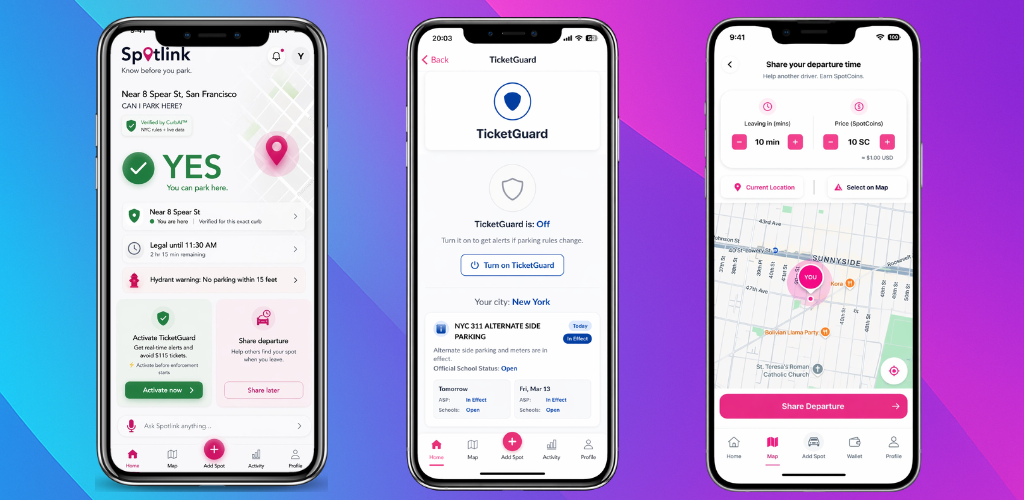
Once you understand the rule, Spotlink can provide another check before you commit to the curb: CurbAI helps interpret sign context, and Ticket Guard helps you stay aware of parked-car timing and risk. Posted signs and official rules remain the authority.