
Direct answer: if you have a flat tire, a dead battery or no fuel in NYC, first assess the traffic and immediate danger. Move to a safer place only if you can do so safely. You can contact appropriate roadside help once safely stopped. For injuries, fire, a serious crash or an immediate threat, call 911; do not wait for an app response.
First, assess the scene before touching the car
A quiet parking lane, an expressway shoulder and an active traffic lane require different decisions. Turn on hazard lights if safe. Avoid standing between vehicles or stepping into moving traffic. If the car cannot be moved safely, tell the emergency operator or roadside professional where it is and follow their instructions.
Do not attempt a roadside repair simply because you have tools. A tire change needs a safe location and the correct equipment; a busy lane or unstable surface can make it unsafe. Contact professional help when you cannot safely assess or handle the problem.
A flat tire: choose a safe next step
Do not keep driving just to reach your original destination. When safely stopped, check the vehicle manual for tire damage, spare-tire or repair-kit instructions and restrictions. If you lack the equipment, experience or a safe place to work, arrange assistance instead of attempting the change beside passing traffic.
Example: if the damaged tire is on the traffic side, do not stand in that lane to inspect it. Give a roadside professional the location and explain which side is affected. A blocked travel lane or an immediate threat needs emergency attention.
A dead 12V battery or a car that will not start
A no-start condition does not prove the battery is the cause. Describe what you observe to a qualified professional rather than guessing. Consult your vehicle manual before a jump start; battery access and approved procedures differ by vehicle. Do not improvise cable connections or work on damaged, leaking or overheated components.
If you are unsure of the diagnosis or procedure, use professional roadside help. Tell the person you contact the make, model and whether the vehicle is gasoline, hybrid or electric.
Out of gas or low EV charge
Stop safely and identify your location before arranging help. Avoid walking along an expressway or crossing traffic to look for fuel. Ask your existing roadside service or manufacturer about the appropriate next step, including whether recovery is needed.
A depleted EV traction battery is different from a dead 12V battery. Do not assume a conventional jump start can recharge an EV’s main battery. Follow the vehicle’s instructions for charging and recovery, and tell the service provider that it is an EV. Never touch exposed high-voltage components or try to repair crash damage yourself. NHTSA’s electric-vehicle guidance explains battery hazards.
Prepare the information someone needs to find you
- Borough, street, nearest cross street and direction of travel.
- Whether you are in a parking lane, shoulder or travel lane.
- Vehicle description and the problem you observed.
- Any injuries, smoke, fire, leaking fluid or immediate danger.
- A safe way to contact you through the service you chose; do not post sensitive information publicly.
For example, a street name alone may not identify which side of a divided road you are on. Give the road direction and a nearby landmark when available.
Where Spotlink SOS fits
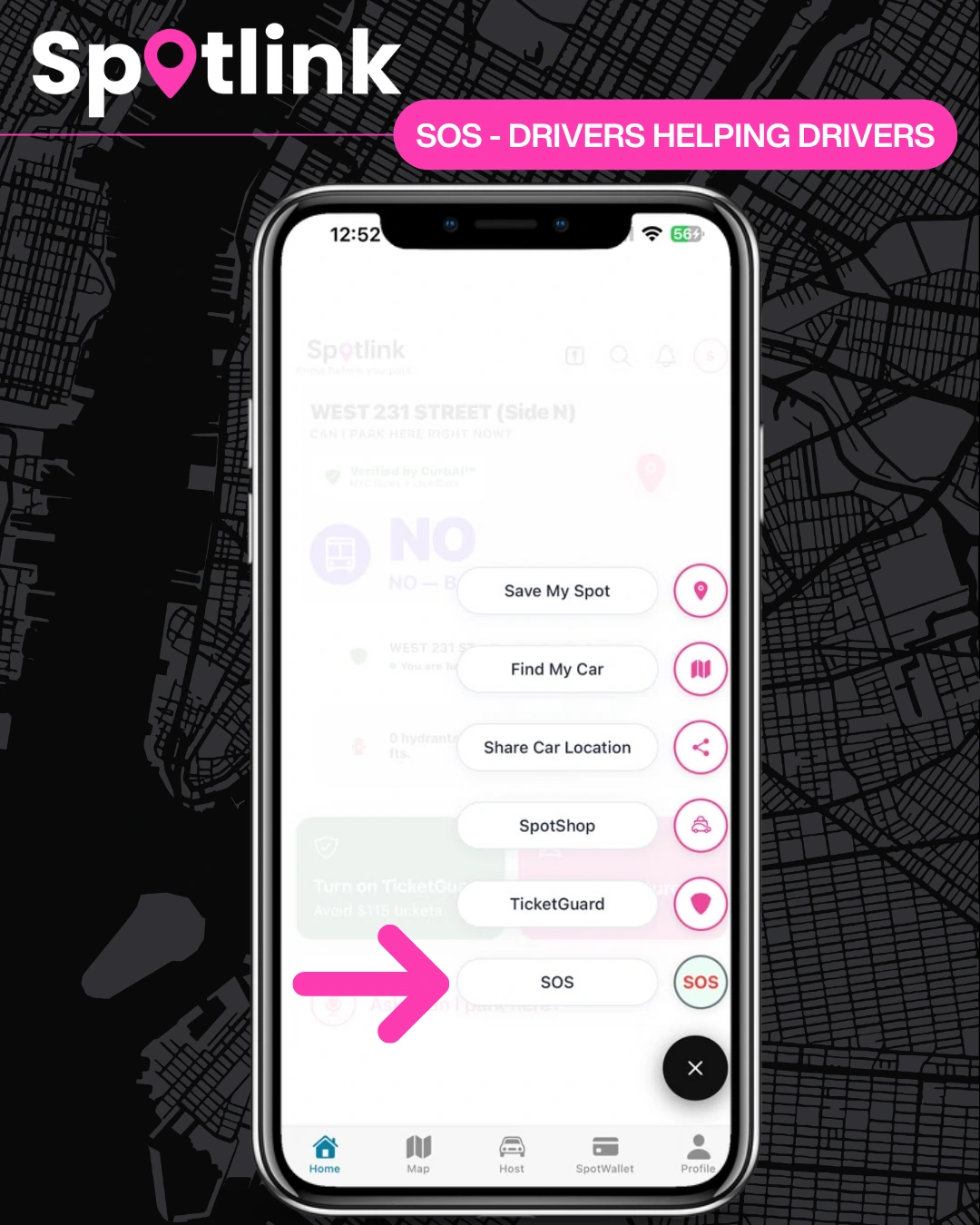
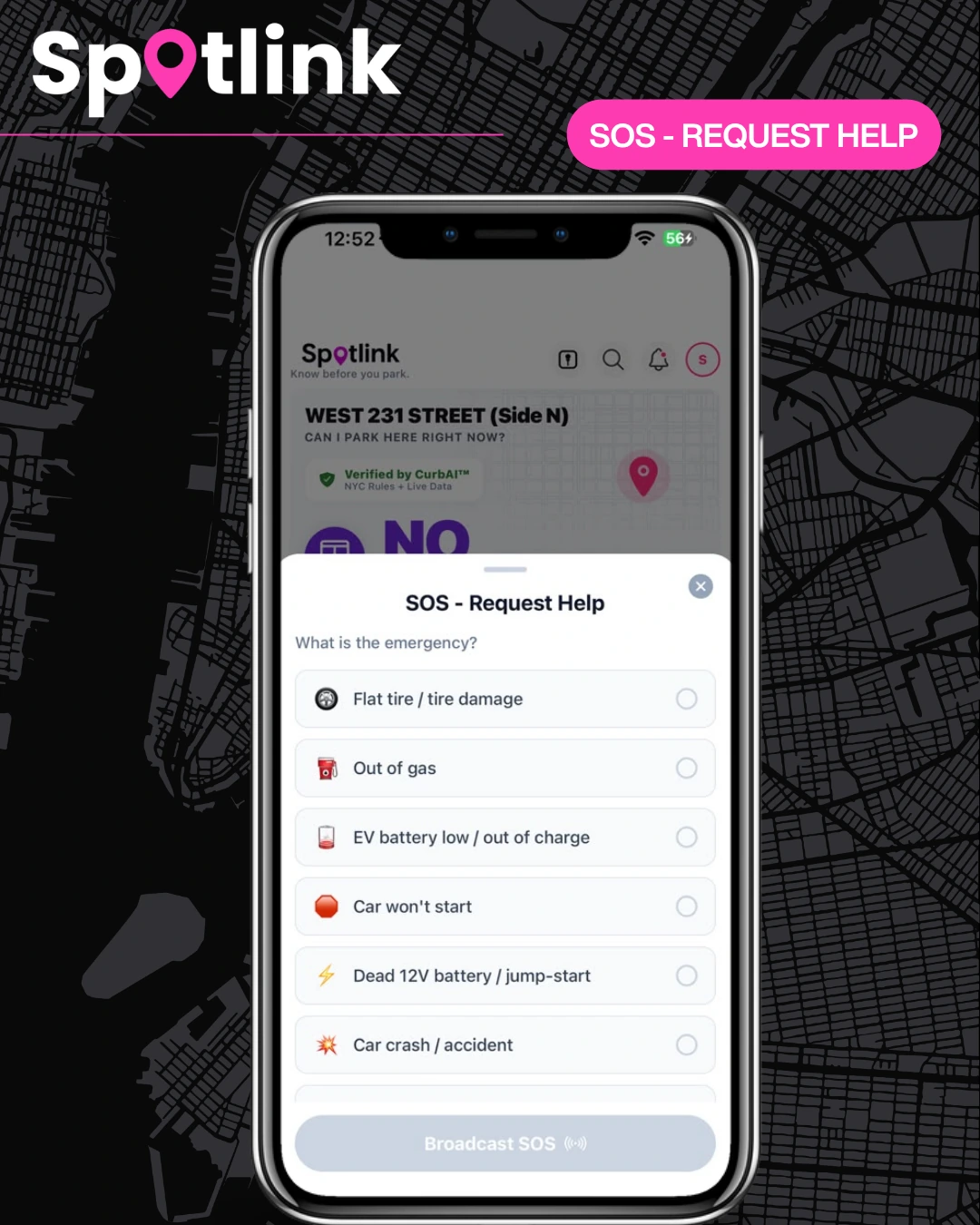
For a non-emergency situation, Spotlink SOS is an additional community option. Open SOS from the quick-action menu, select the problem and broadcast a request. Other participating users can discover it and voluntarily choose “I Will Help.”
You see acceptance, the request becomes matched, and its active broadcast stops. The helper receives guidance toward the associated location, while both participants can see the distance between them. Either person can cancel at any time. Acceptance does not guarantee arrival, professional qualifications or a successful repair.
If nobody accepts, you may remain without community assistance. Contact your existing roadside coverage, insurer, manufacturer or an appropriate professional; do not assume automatic escalation. SOS does not dispatch emergency services and is not a substitute for 911.
Prepare before your next trip
Keep a charged phone and the details of your existing assistance coverage available. Check tire condition, fuel or charge before setting off. NHTSA’s driving checklist also recommends a phone charger, flashlight, drinking water and an emergency kit. Supplies are useful only when using them will not expose you to traffic or other danger.
For everyday trips, review CurbAI, TicketGuard and saving or privately sharing your parked-car location. These parking tools do not replace roadside or emergency services.
Frequently Asked Questions
Should I use SOS instead of calling 911 after a crash?
No. Call 911 for injuries, immediate danger, fire or a serious accident. In NYC, call if you can; text 911 only if you cannot safely call, following the city’s instructions.
Does an accepted SOS guarantee help will arrive?
No. Assistance is voluntary. The requester can cancel, and the helper can withdraw at any time. Keep another safe option available.
Can a volunteer handle any vehicle repair?
No. Matching does not establish training, equipment or professional qualifications. Use appropriate professional assistance for work you cannot safely handle.
Sources and scope
This is general safety information, not vehicle-specific repair instructions. Follow the vehicle manual and emergency personnel. Sources reviewed for this article: NYC emergency contact guidance, NHTSA trip preparation and NHTSA EV safety. The SOS workflow was confirmed by Spotlink’s product owner; the supplied screenshots show only the entry menu and an unsubmitted form.