
Avoid Circling for Parking
Circling for parking happens when drivers lack clear, timely information about where they can legally park. In NYC, this leads to wasted time, higher stress, more tickets, and unnecessary congestion.
Avoiding circling isn’t about luck or driving faster. It’s about having visibility into what’s legal now — and what’s about to change.
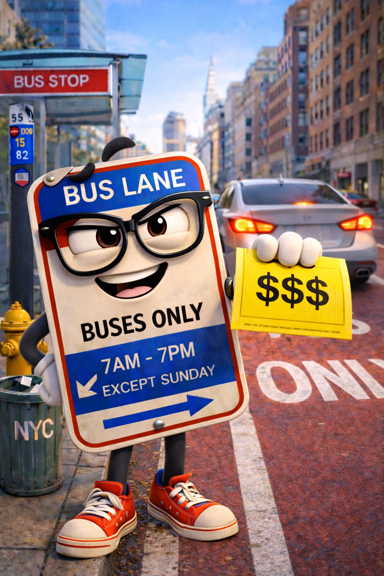
Quick Answer
You avoid circling for parking by knowing curb rules and timing before you arrive. When drivers see legal options early, they can plan calmly instead of looping blocks and reacting too late.
CurbAI™ helps interpret complex parking signs and curb rules so you don’t have to guess.
Ticket Guard™ helps alert drivers before time-based rules begin, reducing surprise tickets.
Driver-powered signals help reveal when spots are about to open.
Why Drivers End Up Circling
Most circling happens because drivers arrive without certainty.
Common causes include:
Unclear or stacked parking signs
Time-based rules like street cleaning or rush-hour restrictions
Assuming “open curb” means legal parking
Discovering rules only after arriving
By the time drivers realize a spot isn’t legal, they’ve already lost time and momentum.
Circling Is a Timing Problem
Parking frustration is rarely about distance. It’s about timing.
Drivers circle because they don’t know:
If a spot is legal right now
If it will remain legal in 5 or 10 minutes
If a nearby spot is about to open
When timing is unclear, circling feels like the only option.
Step-by-Step: How to Avoid Circling for Parking
1. Check curb legality before arriving
Understanding sign rules in advance prevents wasted loops.
2. Look for early signals, not empty spaces
An empty space may already be targeted by another driver. Early signals give you time to plan.
3. Account for time-based changes
Street cleaning, permit hours, and peak restrictions often begin suddenly.
4. Choose legality over convenience
The first legal option is usually the fastest overall.
5. Commit calmly
Drivers who act early don’t need aggressive turns or last-second decisions.
How Spotlink Helps Reduce Circling
Spotlink is designed around timing, not guessing.
CurbAI™ helps drivers understand curb rules before committing.
Ticket Guard™ alerts drivers before restrictions begin.
Driver-powered departure signals show when parking is about to open.
This combination turns circling into planning.
Common Mistakes That Increase Circling
Relying on outdated or static parking maps
Ignoring upcoming rule changes
Chasing the closest open space instead of a legal one
Waiting until arrival to read signs
Why Circling Hurts Urban Mobility
Circling doesn’t just affect the driver.
When many drivers circle:
Traffic congestion increases
Fuel consumption rises
Emissions increase
Streets become more chaotic
Reducing circling improves safety and flow for everyone.
Avoiding Circling Improves the Whole Trip
When drivers know where and when they can park:
Trips end faster
Stress decreases
Tickets become less likely
Neighborhoods stay calmer
Final Thoughts
Avoiding circling for parking isn’t about finding the perfect spot — it’s about finding the right one at the right time.
Spotlink helps drivers make informed decisions early, reducing loops, stress, and congestion across NYC.
FAQ
Why do drivers circle so much for parking in NYC?
Because curb rules are complex and drivers often arrive without knowing what’s legal or about to change.
Does circling really cause congestion?
Yes. Circling vehicles are a major contributor to local traffic congestion.
Is circling illegal?
Circling itself is not illegal, but it increases the likelihood of violations and unsafe maneuvers.
How can apps help reduce circling?
Apps that show real-time curb rules and early parking signals help drivers plan instead of guessing.
How does Spotlink help drivers avoid circling?
Spotlink combines curb rule interpretation, alerts, and early departure signals to reduce uncertainty.