
NYC Street Parking and Loading Rules
NYC street parking and loading rules determine when you can park, stop briefly, load, or wait at the curb. These rules vary by block, time of day, vehicle type, and posted signage.
Confusion around parking vs loading is one of the most common reasons drivers get ticketed — especially during busy hours when curb use changes quickly.
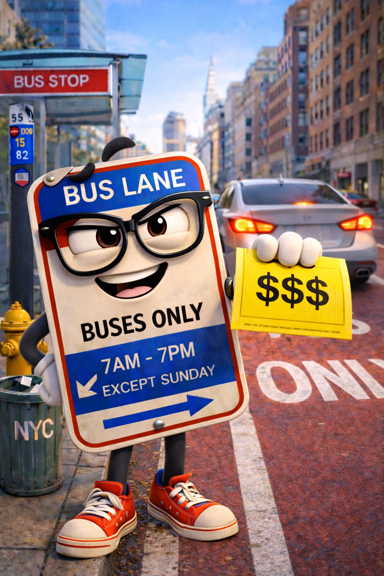
Quick Answer
In NYC, parking and loading are different legal actions. A curb that allows parking at one time may switch to loading-only or no standing minutes later. Knowing the current rule — and what’s about to change — is essential.
CurbAI™ helps interpret complex parking signs and curb rules so you don’t have to guess.
Ticket Guard™ helps alert drivers before time-based rules begin, reducing surprise tickets.
Driver-powered signals help reveal what’s changing on the street.
Why Parking and Loading Rules Are Confusing
NYC uses the same curb space for multiple purposes throughout the day.
On a single block, the curb may serve as:
General street parking
Metered parking
Commercial loading
Passenger pickup and drop-off
No standing during peak hours
Rules change based on time windows, arrows, and vehicle class — not whether the curb looks empty.
Street Parking vs Loading: What’s the Difference?
Street Parking
Street parking generally allows a vehicle to be left unattended for a limited period. Parking rules often include:
Time limits
Meter requirements
Permit restrictions
Street cleaning schedules
Loading
Loading zones are intended for active loading or unloading of goods or passengers.
Loading rules often:
Restrict use by vehicle type
Require continuous activity
Limit duration
Prohibit leaving the vehicle unattended
Using a loading zone as parking — even briefly — can result in a ticket.
Step-by-Step: How to Check Street Parking and Loading Rules
1. Read all posted signs
Look for stacked signs that indicate parking, loading, or no standing. Arrows show where each rule applies.
2. Identify the current time and day
Many loading rules apply only during business hours, while parking may be allowed at night or on weekends.
3. Determine vehicle eligibility
Some loading zones are limited to commercial vehicles only.
4. Check for upcoming rule changes
A spot that’s legal now may become restricted shortly due to street cleaning or peak-hour enforcement.
5. Watch for temporary overrides
Construction signs or temporary restrictions override standard rules.
How Spotlink Helps With Parking and Loading Decisions
Spotlink is built to support real-time curb decisions.
CurbAI™ interprets parking and loading signs together, including arrows and time windows.
Ticket Guard™ alerts drivers before time-based restrictions begin.
Driver-powered signals help show live curb activity.
This reduces guesswork and helps drivers choose the lowest-risk option.
Common Mistakes Drivers Make
Using loading zones for short parking stops
Leaving a vehicle unattended in a loading zone
Ignoring arrows that limit where loading applies
Missing the start of no-standing or cleaning hours
Assuming rules are the same every day
Why Parking and Loading Rules Matter for Urban Mobility
When parking and loading rules are misunderstood:
Double-parking increases
Traffic lanes are blocked
Transit and bike lanes are disrupted
Congestion and emissions rise
Clear curb use supports safer, smoother movement for everyone.
Parking and Loading Are Timing Problems
Most violations happen because drivers act without knowing what will change next.
Understanding parking and loading rules means knowing:
What is allowed now
Who it applies to
When enforcement begins or ends
That timing clarity prevents most tickets.
Final Thoughts
NYC street parking and loading rules are complex, but they don’t have to be overwhelming.
Spotlink helps drivers interpret curb rules in real time — reducing confusion, tickets, and unnecessary congestion.
FAQ
What is the difference between parking and loading in NYC?
Parking allows leaving a vehicle unattended, while loading requires active loading or unloading and often limits vehicle type.
Can passenger vehicles use loading zones?
Some loading zones allow passenger loading briefly, but many are restricted to commercial vehicles.
Do loading rules change by time of day?
Yes. Many loading zones are only active during business hours.
Can I park in a loading zone at night?
Only if signs explicitly allow parking outside loading hours.
Why are parking and loading violations so common?
Because rules change by time, vehicle type, and curb designation, and signs are often misread.