
Can I Stop Briefly Here in NYC?
“Can I stop briefly here?” is one of the most common — and costly — questions drivers ask in NYC.
Many drivers assume that stopping for a few seconds is always allowed. In reality, NYC curb rules often prohibit even very short stops, depending on location, signage, and time of day.
Quick Answer
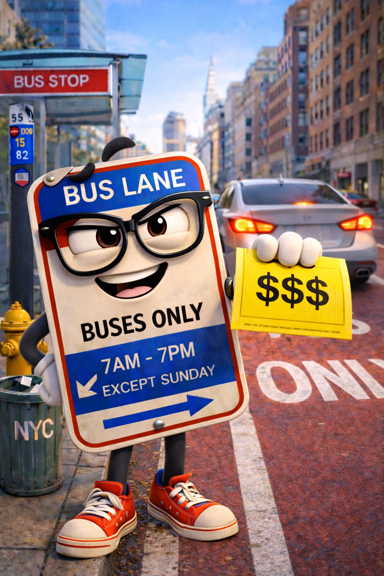
You may only stop briefly if the curb allows standing or loading at that time. If a curb is marked No Standing or No Stopping, even a short stop can result in a ticket.
CurbAI™ tells you if stopping is allowed at this curb right now.
Ticket Guard™ warns you before time-based no-standing rules begin.
Real-time curb signals reduce hesitation and last-second decisions.
What Does “Stopping Briefly” Mean?
Stopping briefly usually means pulling over for a short moment without leaving the vehicle.
Common examples include:
Letting a passenger out
Picking someone up quickly
Checking directions
Waiting “just a second”
In NYC, legality is determined by curb rules — not how short the stop feels.
No Stopping vs No Standing vs Parking
No Stopping
No stopping means exactly that. You cannot stop for any reason except emergencies.
No Standing
No standing allows brief stops only for active passenger or goods loading. Waiting is not allowed.
Parking
Parking means leaving your vehicle unattended and is allowed only where signs explicitly permit it.
Why Brief Stops Are Heavily Enforced
Even short stops can:
Block bus lanes
Force cyclists into traffic
Disrupt emergency access
Create sudden congestion
Because of this, enforcement treats brief illegal stops seriously.
How Time of Day Changes the Answer
The same curb can allow stopping at one time and prohibit it minutes later.
Rush-hour no-standing rules
School or hotel pickup windows
Street cleaning schedules
Drivers who ignore timing are the most likely to be ticketed.
Common Mistakes Drivers Make
Assuming hazard lights make stopping legal
Stopping in bike or bus lanes “just for a second”
Waiting for passengers instead of actively loading
Relying on empty curbs instead of signs
How Real-Time Curb Awareness Helps
Real-time curb awareness allows drivers to:
Know if stopping is legal before pulling over
Choose safer pickup locations
Avoid enforcement pressure
This reduces stress, tickets, and congestion.
Brief Stops and Urban Mobility
Thousands of illegal brief stops add up.
When drivers stop illegally:
Traffic slows
Transit reliability drops
Street safety declines
Clear stopping rules help cities move better.
Final Thoughts
In NYC, brief does not always mean legal.
Knowing whether you can stop — and when — prevents tickets and keeps traffic flowing.
Spotlink helps drivers understand curb rules in real time so short decisions don’t become expensive mistakes.
FAQ
Can I stop briefly anywhere in NYC?
No. Many curbs prohibit stopping entirely, even for a few seconds.
Do hazard lights make stopping legal?
No. Hazard lights do not override curb rules.
Can I stop in a no-standing zone?
No. No-standing zones prohibit brief stops.
Does stopping legality change by time of day?
Yes. Many rules activate or expire at specific times.
How can I avoid tickets for brief stops?
Confirm curb rules in real time before pulling over.