
NYC Alternate Side Parking Rules: Mistakes Drivers Should Avoid
Alternate Side Parking in NYC looks simple until the sign, the clock, and the street-cleaning schedule all collide.
Many drivers get tickets because they move too late, return too early, follow what another parked car is doing, or forget that a rule can change block by block. This guide explains the most common alternate side parking mistakes NYC drivers should avoid, what to check before leaving the car, and how to reduce the risk of a ticket.
What Alternate Side Parking means in NYC
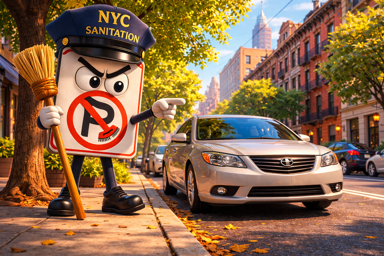
Alternate Side Parking, often called ASP, is the NYC rule that temporarily clears one side of a street so sanitation crews can clean the curb. When the ASP rule is active for your side of the block, you usually cannot leave your car parked there during the posted window.
The rule is not citywide at the same time. It depends on the exact sign, side of the street, day of the week, time window, and any temporary or holiday suspension. Always check the posted sign and official NYC updates before relying on memory.
Why NYC has Alternate Side Parking
NYC uses ASP so street sweepers can reach the curb lane. Parked cars block trash, leaves, and debris from being cleaned, so the city creates short parking restrictions on specific days and sides of the street.
NYC streets combine time windows, arrows, parking signs, hydrants, loading zones, bus activity, school activity, and enforcement patterns. A space can look available and still be risky if the active rule is missed.
How to read an Alternate Side Parking sign
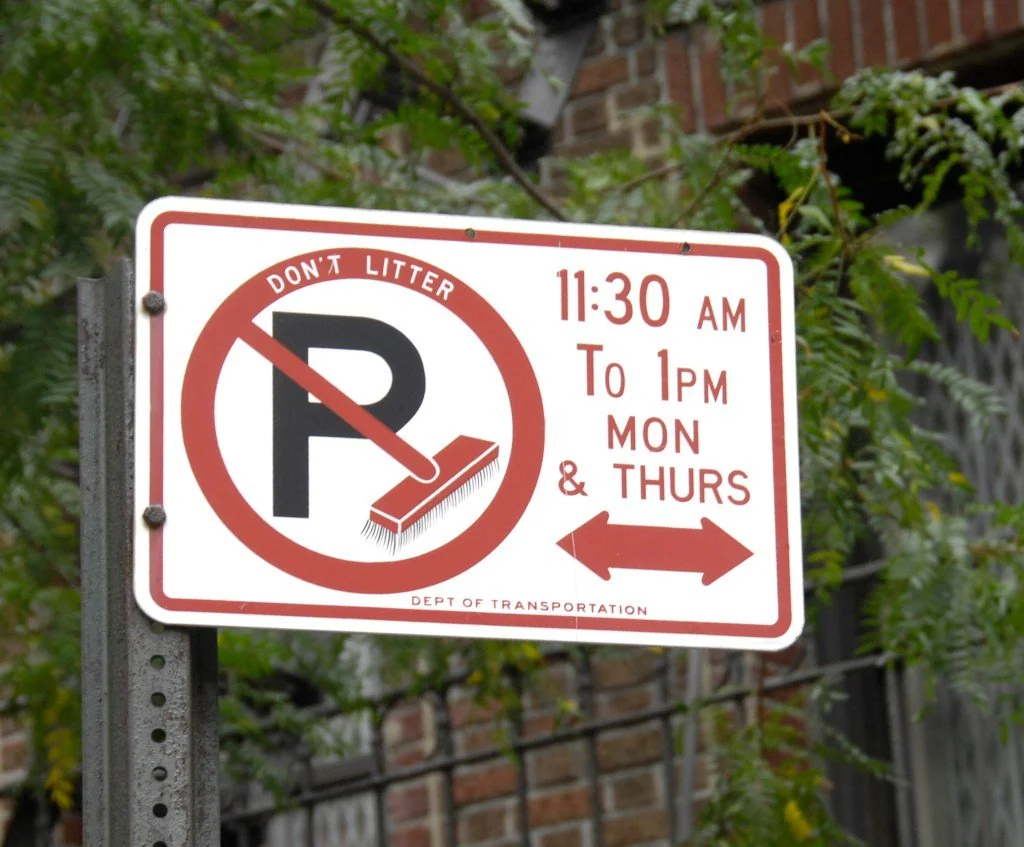
Start with the exact sign closest to your car. Read it from top to bottom, then match it to your side of the block.
Day: Look for days such as Monday and Thursday, or a single posted day.
Time: Check the full window, such as 9:30 AM to 11:00 AM.
Arrow: Confirm which stretch of curb the sign controls.
Other signs: A meter, No Standing sign, hydrant, bus stop, loading zone, or temporary notice can still change the decision.
When you must move your car
You generally need to move before the posted ASP window begins for your side of the street. If the sign says the restriction starts at 9:30 AM, waiting until 9:30 is already risky. Give yourself enough time to move, find another legal space, and avoid sitting in the restricted zone.
Rules can vary by block, and temporary signs or official suspensions may change the normal schedule. The safest habit is to check the sign every time, especially if you are parking overnight or leaving the car for several hours.
When you can return after street cleaning
In many ASP situations, drivers wait until the posted restriction ends before returning to the curb. Some drivers try to return after the sweeper passes, but enforcement and local practice can vary, and the posted sign still matters. If the sign says the restriction runs until 11:00 AM, returning before 11:00 AM can still carry ticket risk.
Use the posted end time as the conservative rule of thumb unless you have confirmed the current local rule through official guidance.
Does ASP mean no parking all day?
Usually, no. ASP normally applies only during the posted cleaning window on the posted days. Outside that window, regular parking may be allowed if no other active restriction applies.
Do not assume the rest of the day is legal automatically. A different sign on the same pole or nearby curb may control another time window.
Can you sit in the car during ASP?
Sitting in the car does not automatically make the space legal. If the ASP restriction is active and the rule says parking is not allowed during that window, staying behind the wheel may still be treated as a violation depending on enforcement and the exact restriction.
The safer move is to be out of the restricted space before the window starts.
Can you park after the sweeper passes?
Drivers often ask whether they can return right after the street sweeper goes by. The practical risk is that the sign may still show an active restriction even after the sweeper passes. Enforcement can depend on posted times, local rules, and official guidance, so do not treat the sweeper passing as automatic permission.
If you want the lowest-risk decision, follow the posted time window and verify official NYC rules when the situation is unclear.
Common mistakes that lead to tickets
Moving the car too late after the ASP window begins.
Returning before the posted restriction ends.
Copying what another parked car is doing.
Reading the wrong sign or ignoring the arrow.
Forgetting that rules can change across the street or mid-block.
Missing a temporary notice, holiday suspension, or another restriction layered on the same curb.
What to check before leaving your car
The exact sign controlling your side of the block.
The posted ASP day and start/end time.
Whether today matches the sign.
Whether the arrow points to your space.
Other active restrictions: hydrant, bus stop, No Standing, loading zone, meter, driveway, school activity, or temporary signs.
How long you plan to be away from the car.
How Spotlink helps after the rule is already explained
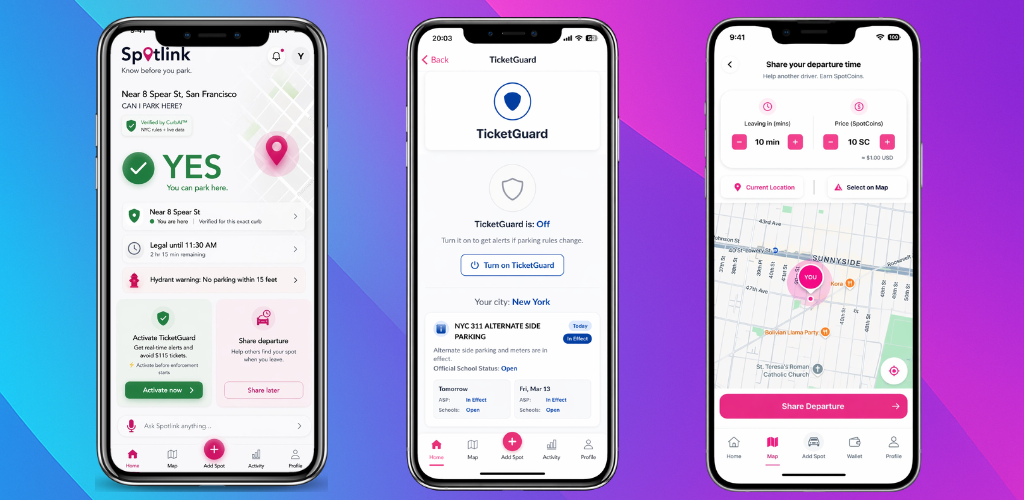
Once you understand the ASP rule, the hard part is applying it quickly on a real NYC block. CurbAI helps drivers interpret signs and curb context before they leave the car. Ticket Guard helps keep timing and ticket-risk situations visible after parking.
Spotlink does not replace posted signs or official NYC rules. It helps you ask the practical driver question before the mistake happens: can I park here right now?
FAQ
What should I check first?
Check the exact sign, arrow, day, time, curb marking, and nearby restriction before walking away.
Is Alternate Side Parking suspended on holidays?
It can be, but suspensions depend on the official NYC calendar and sometimes weather or emergency changes. Verify current official NYC guidance before relying on a suspension.
Can Spotlink help reduce parking ticket risk?
Spotlink is designed to reduce uncertainty by helping drivers check curb rules, timing, and ticket-risk situations before they leave the car.
Related Spotlink resources
Check before you park
Before you leave your car, use Spotlink to check curb rules, timing, and ticket-risk situations in NYC. Explore CurbAI, Ticket Guard, or start from the Spotlink homepage.