
Can You Park Near a Fire Hydrant in NYC?
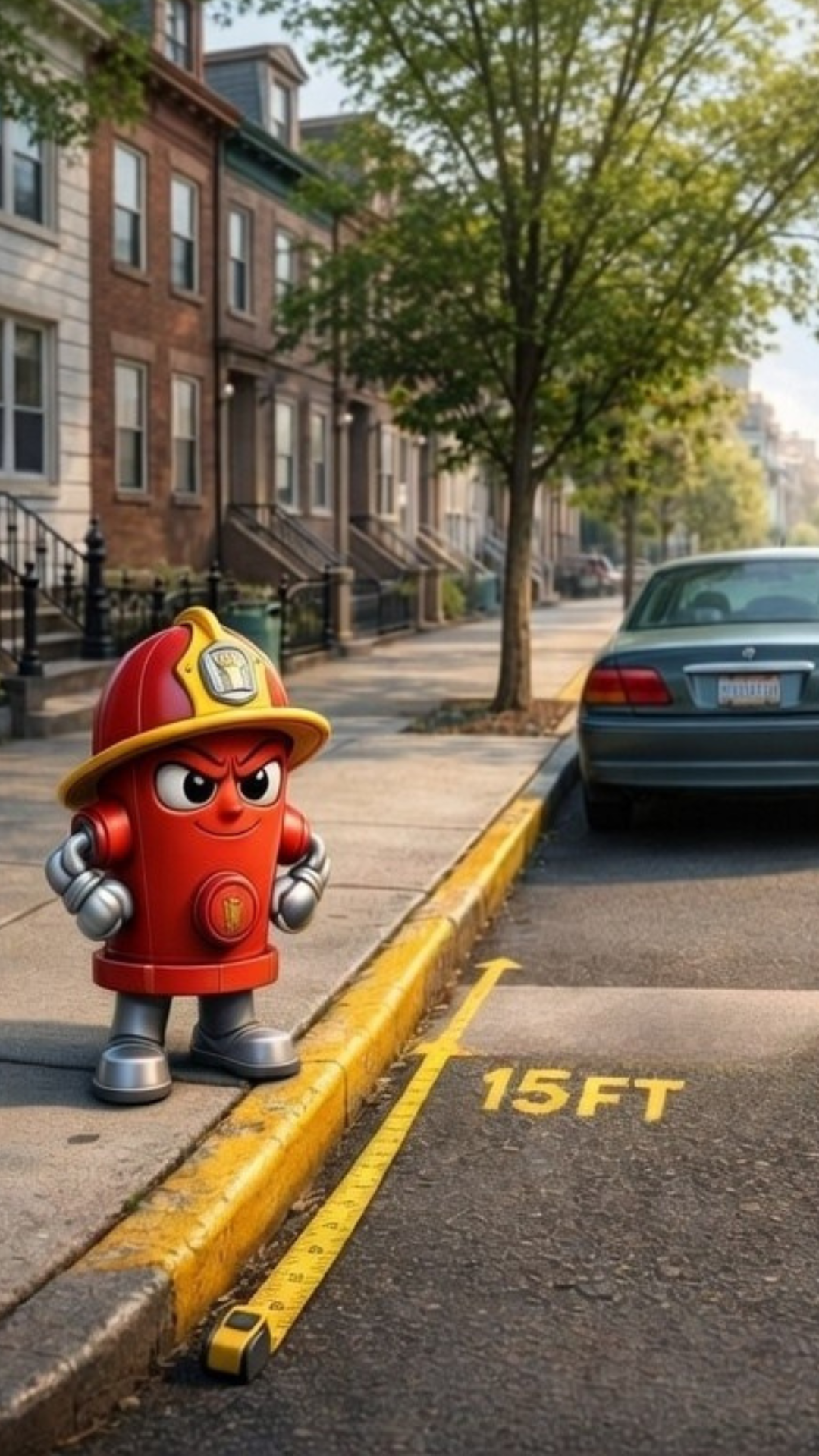
Direct answer: You cannot park within 15 feet of either side of a fire hydrant in NYC, including beside a hydrant in a floating parking lane. The standard hydrant violation is code 40 and carries a $115 fine citywide. A narrow daytime exception may allow a passenger vehicle to stand—not park—alongside a hydrant when parking is not otherwise restricted, but a licensed driver must remain behind the wheel and be ready to move immediately.

Driver impact
Violation: code 40, within 15 feet of a fire hydrant.
Current base fine: $115 citywide.
NY DMV points: 0. This is a parking violation.
Other consequence: the vehicle may be towed; NYC is a tow-away zone for illegally parked vehicles.
What the 15-foot rule means
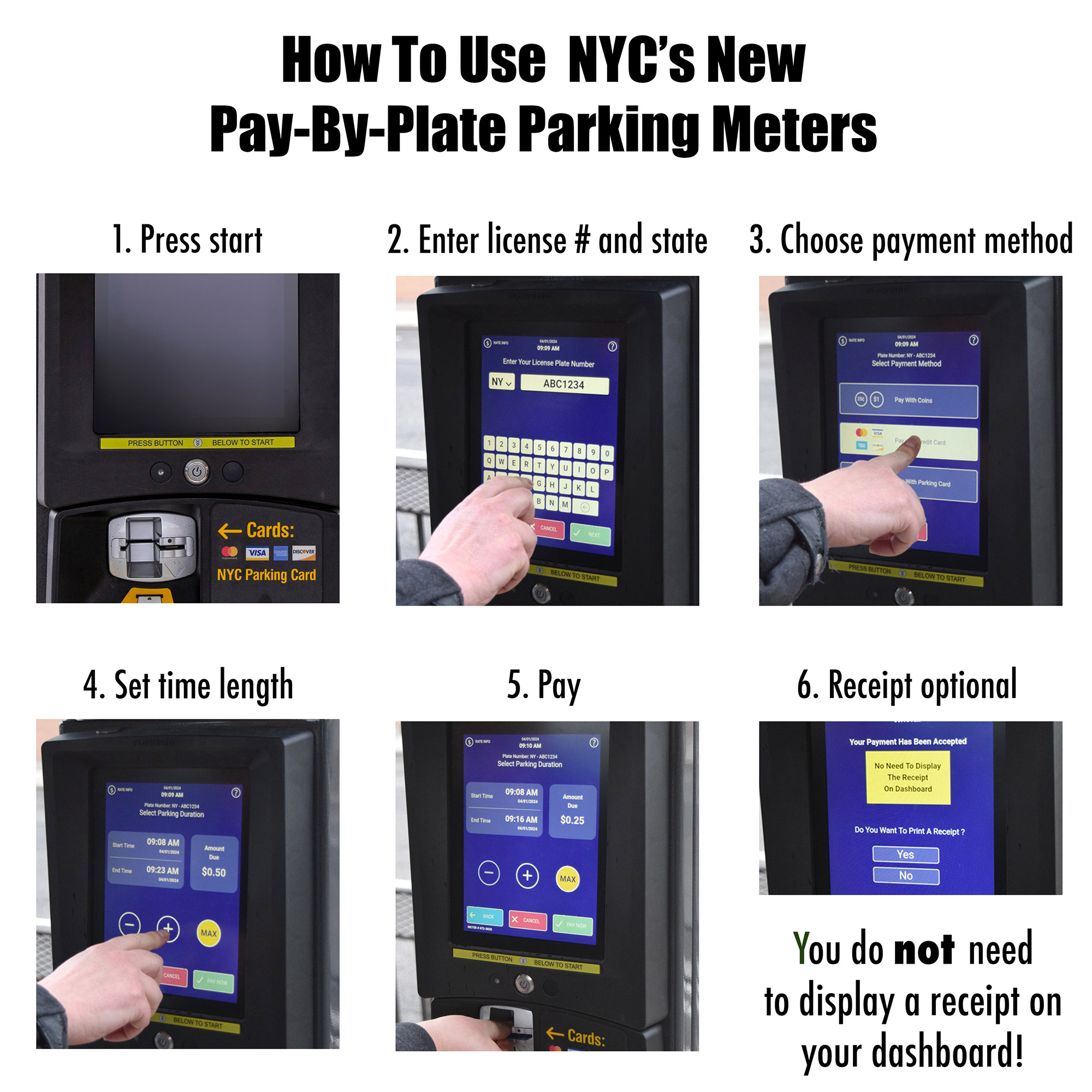
Measure from the hydrant along the curb in both directions. The rule applies even if the curb is not painted, the hydrant is partly hidden, another vehicle is nearby, or the parking lane floats beside a protected bike lane. Hazard lights do not create an exception.
What is allowed and prohibited
| Situation | Answer |
|---|---|
| Park and leave within 15 feet | Not allowed |
| Wait unattended within 15 feet | Not allowed |
| Passenger car stands there in daylight, driver behind wheel and ready to move | May be allowed* |
| Space has another active restriction | Follow the stricter rule |
* Only between sunrise and sunset, when standing is not otherwise prohibited, and with a licensed driver continuously behind the wheel ready to move.
Examples
You leave the car for a quick errand
Not allowed within 15 feet. The length of the errand does not change the rule.
You stay behind the wheel at noon
The limited daytime standing exception may apply to a passenger vehicle if no other restriction prohibits standing and you are ready to move immediately. It does not permit parking or leaving the car.
The curb has no paint
The 15-foot rule still applies. Curb paint is not required to make the hydrant restriction enforceable.
What to check before leaving the car
Look in both directions for a hydrant, including across a floating parking lane.
Leave at least 15 feet between the vehicle and the hydrant.
Check all signs, arrows, driveways, crosswalks, bike lanes, and other restrictions.
If you cannot confidently judge the distance, choose another space.
Common questions
Does a hydrant ticket add license points?
No. It adds 0 NY DMV points, but the $115 fine and possible towing still matter.
Does a disability parking permit override the hydrant rule?
No. NYC DOT states that its permit for people with disabilities does not authorize parking within 15 feet of a hydrant.
Official sources
NYC DOT: Fire Hydrants and Parking Regulations
NYC Department of Finance: Code 40 and Fine
NY DMV: Driver Point System
NYPD: Towed Vehicles
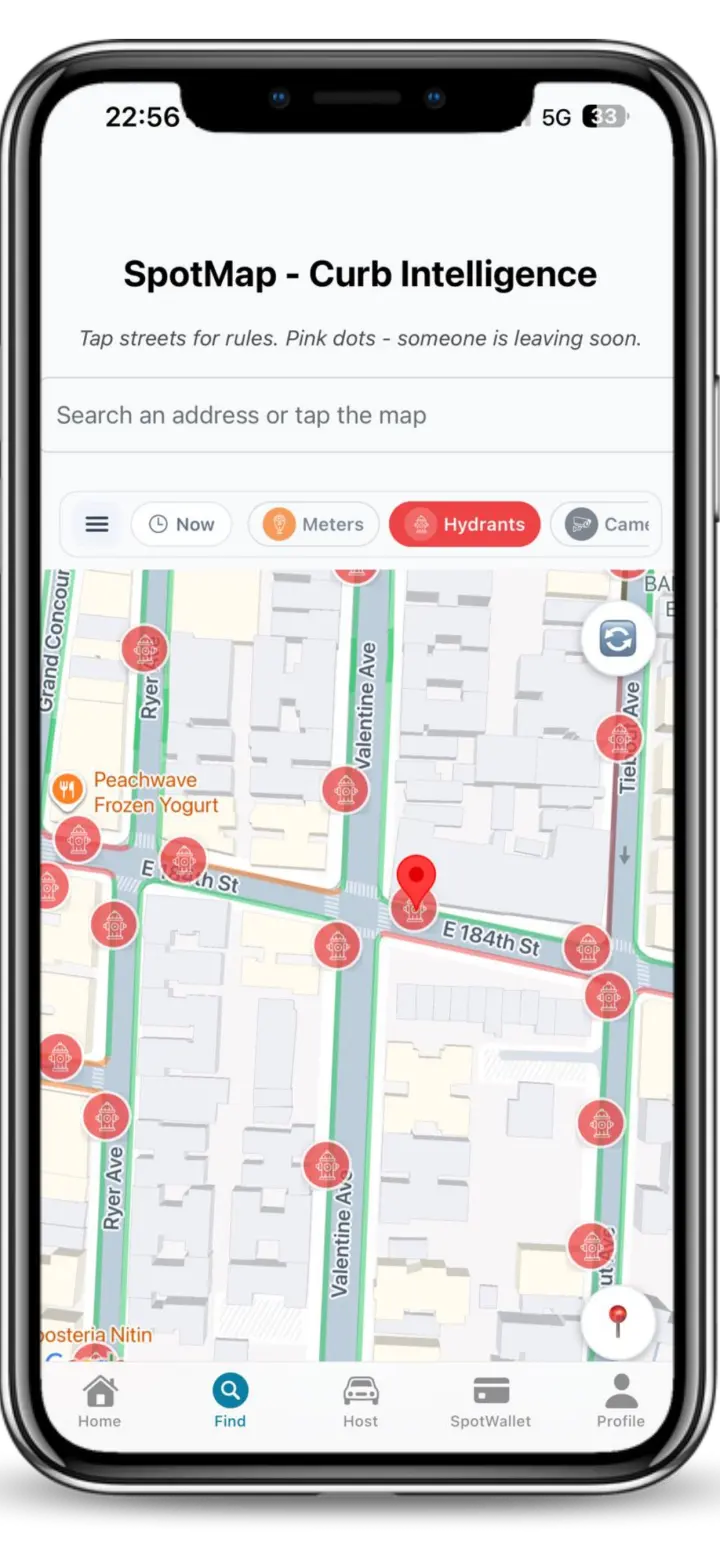
After you know the rule, CurbAI can provide another check on hydrant and sign context before you leave the car. Official signs and rules remain the authority.