
Ride-Hail Pickup Zones in NYC
Ride-hail pickup zones in NYC are tightly regulated and heavily enforced. Uber and Lyft drivers often get ticketed not because they linger too long, but because they stop at the wrong curb.
Knowing where ride-hail pickups are allowed — and when — is essential to avoid tickets, blocked lanes, and unsafe stops.
Quick Answer
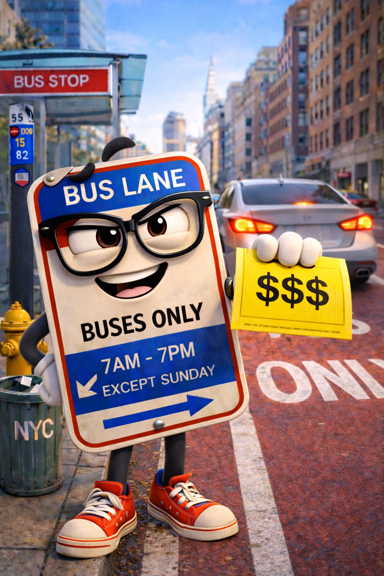
Ride-hail pickups are only legal where curb rules allow standing or passenger loading at that time. No-standing and no-stopping zones prohibit ride-hail pickups, even for a few seconds.
CurbAI™ interprets curb signs and pickup legality in real time.
Ticket Guard™ alerts drivers before no-standing or rush-hour rules begin.
Real-time curb awareness helps drivers choose safer pickup locations.
What Is a Ride-Hail Pickup Zone?
A ride-hail pickup zone is any curb location where stopping briefly to load passengers is allowed under current NYC curb rules.
These zones are not always marked specifically for Uber or Lyft. They are defined by:
Standing or loading permissions
Time-based restrictions
Street design (bus lanes, bike lanes, curb extensions)
Where Ride-Hail Pickups Are Commonly Allowed
Pickups may be allowed:
In legal standing zones outside rush hours
In general curbside areas with no active restrictions
At designated hotel, residential, or passenger loading curbs
Legality always depends on the exact time and signage.
Where Ride-Hail Pickups Are Commonly Illegal
Pickups are often prohibited in:
No-standing or no-stopping zones
Bus lanes and bike lanes
Crosswalks and intersections
Active loading-only zones during restricted hours
Hazard lights do not make these stops legal.
Why Ride-Hail Pickups Are Heavily Enforced
Improper pickups can:
Block buses and cyclists
Create sudden traffic backups
Increase pedestrian risk
NYC prioritizes curb flow, so ride-hail enforcement is aggressive in busy areas.
Time-Based Pickup Rules
A curb that allows pickup at one time may prohibit it minutes later.
Common rule changes include:
Rush-hour no-standing windows
School or hotel pickup restrictions
Temporary construction or event rules
Timing errors are the leading cause of ride-hail tickets.
Common Ride-Hail Pickup Mistakes
Stopping briefly in no-standing zones
Waiting for passengers instead of active loading
Blocking bike or bus lanes “just for a second”
Assuming empty curb space is legal
Ride-Hail Pickups and Urban Mobility
Ride-hail vehicles put intense pressure on curb space.
When pickups are illegal:
Congestion increases
Transit reliability drops
Street safety declines
Clear pickup zones help streets function smoothly.
How Real-Time Curb Awareness Helps Ride-Hail Drivers
Real-time curb awareness allows drivers to:
Confirm pickup legality before stopping
Redirect passengers to safer pickup points
Avoid enforcement hotspots
This reduces stress for both drivers and riders.
Final Thoughts
Ride-hail pickups in NYC depend on timing, signage, and curb use — not convenience.
Knowing where you can legally stop prevents tickets and keeps traffic flowing.
Spotlink helps ride-hail drivers understand pickup rules in real time so every stop is confident and compliant.
FAQ
Can Uber or Lyft pick up passengers anywhere?
No. Pickups are only legal where standing or loading is allowed at that time.
Are ride-hail pickups allowed in no-standing zones?
No. No-standing zones prohibit ride-hail pickups.
Do hazard lights make ride-hail pickup legal?
No. Hazard lights do not override curb rules.
Do pickup rules change during rush hour?
Yes. Many curbs restrict stopping during peak traffic periods.
How can ride-hail drivers avoid pickup tickets?
Check curb rules in real time and choose legal pickup locations.