
NYC Microhub and Loading Zones Explained
Microhubs and loading zones are changing how NYC curbs work. What used to be general parking is now often reserved for deliveries, cargo bikes, and short-term loading — and many drivers don’t realize it until they get ticketed.
Understanding how microhub zones and loading zones function is essential for drivers, delivery workers, and anyone navigating NYC streets legally and efficiently.
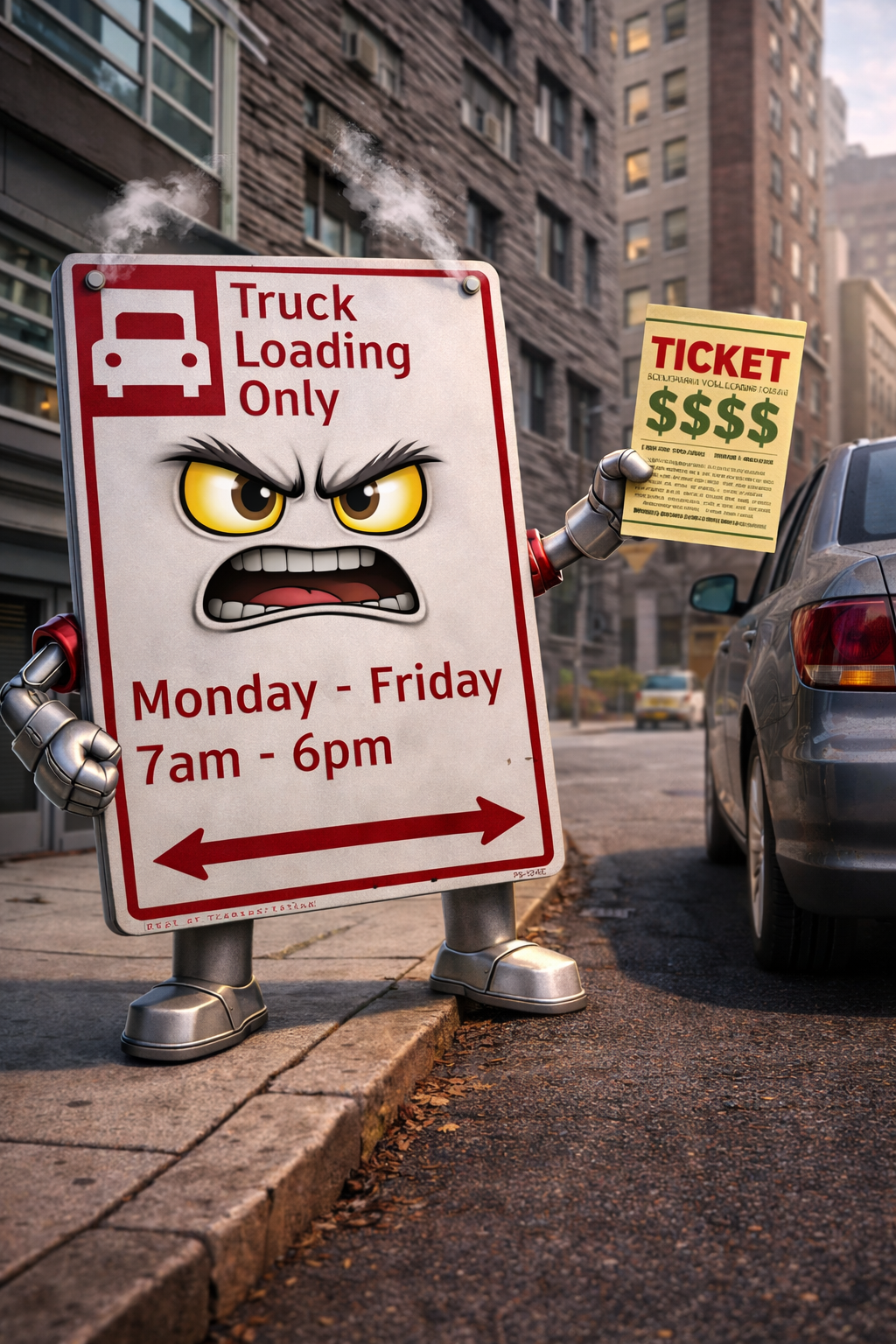
Quick Answer
NYC microhub and loading zones are designated curb areas for short-term loading, deliveries, and transfers — not general parking. Stopping is only legal for specific vehicle types, purposes, and time windows.
CurbAI™ helps interpret microhub and loading zone signs in real time.
Ticket Guard™ alerts drivers before curb rules or time restrictions change.
Clear curb rules reduce double-parking and enforcement risk.
What Are Microhub Zones in NYC?
Microhub zones are curb areas designated for short-distance transfers and last-mile delivery activity.
They are commonly used for:
Cargo bike loading and unloading
Delivery vehicle transfers
Package staging near dense areas
Microhubs are part of NYC’s effort to reduce double-parking, congestion, and blocked bike or bus lanes.
How Microhub Zones Differ From Loading Zones
Although they look similar, microhub zones and traditional loading zones serve different purposes.
Loading zones typically allow short-term loading for specific vehicle types
Microhub zones are designed for delivery transfers, often involving cargo bikes or multiple vehicles
Parking in either zone without qualifying activity is commonly ticketed.
Who Can Use Microhub and Loading Zones
Eligibility depends on signage, time of day, and vehicle type.
Commonly permitted users include:
Commercial delivery vehicles
Cargo bikes and micromobility couriers
Authorized service vehicles
Personal vehicles are usually not allowed unless signage explicitly permits it.
Why These Zones Are Confusing for Drivers
Many drivers mistake microhub zones for regular parking because:
The curb looks similar to a parking lane
Rules change by time of day
Sign language is unfamiliar or newly introduced
Zones may be recently added or reconfigured
This confusion leads to frequent tickets, even for experienced NYC drivers.
Step-by-Step: How to Decide If You Can Stop Here
1) Identify the Zone Type
Look for wording such as “Loading Only,” “Commercial Vehicles Only,” “Neighborhood Loading Zone,” or “Microhub.” If the sign specifies a program or special curb use, treat it as managed curb space, not parking.
2) Check the Time Window
Many zones are only active during set hours. Outside those hours, the curb may convert to general parking, alternate-side restrictions, or no-standing rules.
3) Confirm Vehicle Eligibility
If the sign limits use to commercial vehicles, trucks, or specific users, personal vehicles typically do not qualify. Even if stopping is allowed, it may not be allowed for everyone.
4) Decide Whether Your Activity Counts as Loading
Loading zones usually require active loading or unloading. Waiting, idling, or staging without active movement is a common reason for tickets.
5) Scan for Conflicting Signs
NYC curbs often have stacked rules. If another sign introduces no-standing hours, bus lane restrictions, or construction rules, those may override loading use during certain windows.
Common Ticket Triggers in Microhub and Loading Zones
Stopping without active loading
Waiting instead of loading
Parking outside permitted hours
Using the zone with the wrong vehicle type
Blocking a crosswalk, hydrant, driveway, or curb cut near the zone
Hazard lights do not make stopping legal.
How Microhub Zones Support Urban Mobility
Microhub zones are designed to improve how cities function.
When used correctly, they:
Reduce double-parking
Keep bike and bus lanes clear
Improve last-mile delivery efficiency
Reduce congestion on busy streets
Clear curb use benefits drivers, delivery workers, and neighborhoods.
Using Real-Time Curb Information
Curb rules change throughout the day.
Real-time awareness helps drivers:
Know when loading zones activate or expire
Avoid enforcement-heavy periods
Plan legal stops instead of guessing
This reduces tickets and unsafe stopping behavior.
Microhubs, Loading Zones, and the Future of NYC Streets
As NYC grows denser, curb space becomes more valuable.
Microhubs and loading zones reflect a shift toward:
More efficient freight movement
Reduced congestion
Safer streets for all users
Understanding these zones is now part of everyday urban mobility.
Final Thoughts
NYC microhub and loading zones are not parking shortcuts — they are carefully managed curb spaces.
Knowing when and how you can legally use them helps avoid tickets, reduce congestion, and keep the city moving.
Spotlink helps drivers understand curb rules in real time so every stop is informed and compliant.
FAQ
What is a microhub zone in NYC?
A microhub zone is a curb area designated for delivery transfers and short-term loading, often involving cargo bikes.
Can personal vehicles use microhub zones?
Generally no, unless signage explicitly allows it.
Are microhub zones active all day?
No. Many operate only during specific hours.
Is waiting allowed in a loading or microhub zone?
No. Active loading is required.
Do microhub zones reduce double-parking?
Yes. They are designed to keep delivery activity out of traffic lanes.