
NYC Loading Zone Rules: When Can You Park in a Loading Zone?
NYC loading zones look convenient — and they are — but they’re also one of the fastest ways to get ticketed if you misunderstand who they’re for and when they apply.
This guide explains exactly how NYC loading zones work, who can legally use them, and why so many drivers get it wrong.
Quick Answer
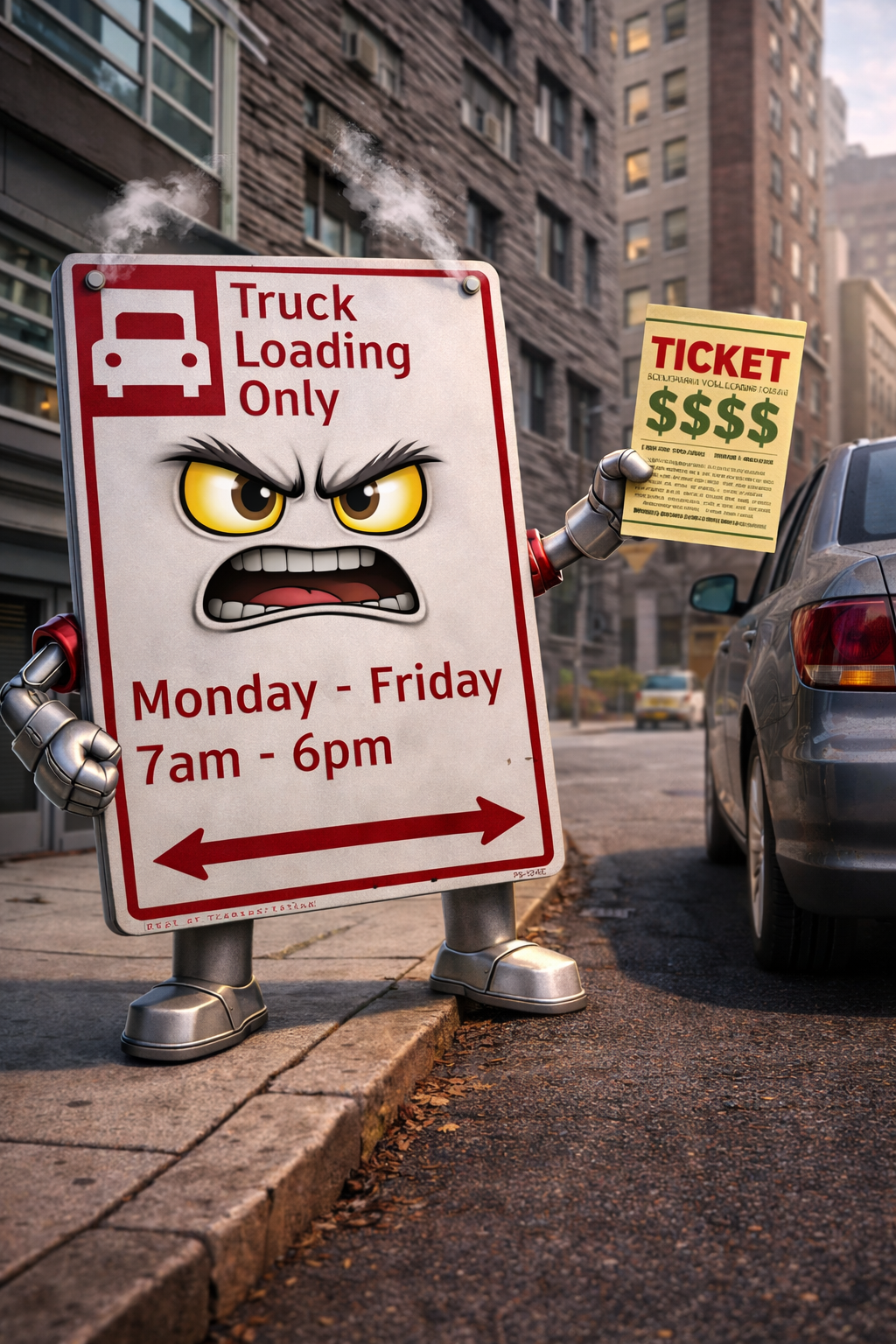
Most NYC loading zones are restricted by vehicle type and time. Many are intended for commercial vehicles only, and stopping in one with a passenger car can result in a ticket — even if you stay in the vehicle.
Why Loading Zones Are So Confusing
NYC loading zones often sit right next to legal parking spaces, and the signs look similar to regular parking signs. The difference is in the details: wording, vehicle type, time limits, and enforcement hours.
Many drivers assume loading zones are “short-term parking.” In NYC, that assumption is expensive.
What Is a Loading Zone?
A loading zone is a curb space reserved for short-term stopping to load or unload goods or passengers, depending on the sign.
There are two main types:
Commercial loading zones (usually for trucks or commercial vehicles)
Passenger loading zones (limited pickup/drop-off only)
Commercial Loading Zones
Commercial loading zones are typically marked with language like “Commercial Vehicles Only”.
Passenger vehicles are usually not allowed
Stopping is limited to loading/unloading goods
Time limits may apply
Enforced during posted hours only
Even a short stop in a commercial loading zone with a passenger car can result in a ticket.
Passenger Loading Zones
Passenger loading zones allow brief stops for picking up or dropping off people.
You may not leave the vehicle unattended
No waiting or parking
Only allowed during posted hours
Using a passenger loading zone for errands or waiting is still a violation.
How to Read a Loading Zone Sign
Step 1: Identify the Vehicle Type
Look for language like “Commercial Vehicles Only” or “Passenger Loading Only.” This determines whether your vehicle qualifies.
Step 2: Check the Time Window
Loading zones are enforced only during listed hours. Outside those hours, other parking rules may apply.
Step 3: Follow the Arrows
Arrows define where the loading zone starts and ends. They apply only to that specific sign.
Step 4: Apply Any Additional Rules
Other restrictions — like No Standing windows or rush-hour rules — can still override a loading zone.
What Happens If You Break Loading Zone Rules
Parking or standing tickets
Traffic obstruction violations
Towing if the vehicle blocks traffic or access
Enforcement is common in busy commercial corridors.
A Smarter Way to Handle Loading Zones
Because loading zone rules change by time, vehicle type, and location, many drivers prefer tools that interpret curb rules clearly before they stop.
CurbAI™ helps interpret complex parking signs and curb rules so you don’t have to guess.
Ticket Guard™ helps alert drivers before time-based rules begin, reducing surprise tickets.
Real-world guides help you learn the patterns drivers miss most often.
Common Mistakes Drivers Make
Assuming loading zones are short-term parking
Ignoring vehicle-type restrictions
Waiting in the car without loading
Missing the enforcement time window
Blocking traffic or access points
Final Thoughts
NYC loading zones are useful when used correctly — and costly when misunderstood.
Before stopping, always confirm whether your vehicle qualifies, whether the rule is active, and whether another restriction applies. If you’re unsure, don’t assume it’s allowed.
Ask Spotlink Before You Park
Use Spotlink to check parking signs, hydrants, street cleaning, and timing before leaving your car. For time-sensitive curb rules, review TicketGuard guidance before parking.
For the broader decision beyond loading rules, see the NYC street-parking app guide.
FAQ
Can passenger cars use commercial loading zones?
No. Most commercial loading zones are restricted to commercial vehicles only.
Can I wait in a loading zone if I stay in the car?
No. Waiting without active loading or unloading is usually a violation.
Are loading zones enforced on weekends?
Some are and some aren’t. Always check the sign for days and hours.
Can loading zones override No Standing rules?
No. The most restrictive active rule always applies.
Do hazard lights make stopping legal?
No. Hazard lights do not override loading zone rules.