
Can Delivery Vehicles Stop Here in NYC?
Delivery vehicles cannot stop just anywhere in NYC. Whether a delivery driver can legally stop depends on curb signage, vehicle type, time of day, and whether active loading is happening.
Many tickets happen because drivers assume a brief stop is allowed — when the curb rules say otherwise.
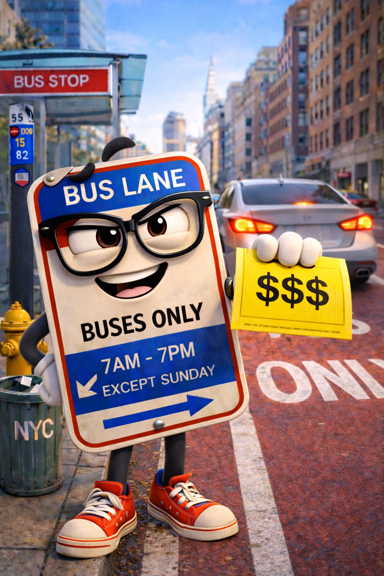
Quick Answer
Delivery vehicles may only stop where loading is explicitly allowed for their vehicle type and during permitted hours. Waiting, overstaying, or stopping in restricted zones often results in tickets.
CurbAI™ interprets curb signs and delivery rules in real time.
Ticket Guard™ alerts drivers before no-standing or restriction windows begin.
Real-time curb clarity helps drivers plan legal stops.
Why This Question Is So Common
Delivery drivers work under time pressure, limited curb access, and heavy enforcement.
Confusion usually comes from:
Multiple signs applying to the same curb
Rules that change by hour
Vehicle-type restrictions
The difference between stopping, standing, and parking
A stop that looks harmless can still be illegal.
Step-by-Step: How to Decide If You Can Stop
1) Identify the Curb Type
Look for signs indicating loading zones, commercial-only zones, bus lanes, bike lanes, or no-standing rules.
2) Check the Time Window
Many delivery-friendly curbs only allow stopping during specific hours. Outside those hours, no-standing rules often apply.
3) Confirm Vehicle Eligibility
If the sign specifies Commercial Vehicles Only, personal vehicles usually do not qualify.
4) Confirm Active Loading
Delivery stops usually require active loading or unloading. Waiting or idling without movement is a common ticket trigger.
5) Check for Conflicting Restrictions
Bus lanes, rush-hour rules, or construction signage can override loading permissions.
Where Delivery Vehicles Are Commonly Allowed to Stop
Commercial loading zones during permitted hours
General loading zones if vehicle type is allowed
Temporary loading areas designated by signage
Legality depends on timing and activity.
Where Delivery Vehicles Are Commonly Ticketed
No-standing or no-stopping zones
Bus lanes and bike lanes
Passenger-only pickup zones
Crosswalks, hydrants, and curb extensions
Hazard lights do not make stopping legal.
Why Delivery Stops Affect Urban Mobility
When drivers can’t identify legal stopping space, they double-park.
This causes:
Traffic congestion
Blocked bike and bus lanes
Unsafe conditions for pedestrians
Clear delivery curb rules reduce friction across the street.
How Real-Time Curb Information Helps
Delivery legality can change minute by minute.
Real-time curb awareness helps drivers:
Find legal loading spots faster
Avoid enforcement-heavy curbs
Time stops before restrictions activate
This improves efficiency and reduces fines.
Final Thoughts
Delivery vehicles cannot stop everywhere in NYC — even briefly.
Understanding curb rules, time windows, and vehicle eligibility is essential to avoid tickets and keep routes efficient.
Spotlink helps delivery drivers understand curb rules in real time so every stop is informed and compliant.
FAQ
Can delivery vehicles stop anywhere if loading?
No. Loading is only allowed where signage permits it and during approved hours.
Are hazard lights enough to avoid tickets?
No. Hazard lights do not override curb rules.
Do delivery rules change during rush hour?
Yes. Many curbs become no-standing zones during peak hours.
Can personal vehicles use commercial loading zones?
Usually no, unless the sign explicitly allows it.
How can delivery drivers reduce tickets?
By checking curb rules in real time and planning stops before restrictions begin.