NYC drivers who delay are already feeling the shift.
Something fundamental is changing on New York City streets — and it’s happening faster than most drivers realize.
There was no single announcement.
No new law everyone remembers.
No dramatic “parking crackdown” headline.
Yet behavior at the curb is already shifting.
Drivers are changing how they decide to stop, wait, or park — not because they want to experiment, but because the curb itself is becoming time-based and tech-aware.
And drivers who don’t adapt are already feeling it.
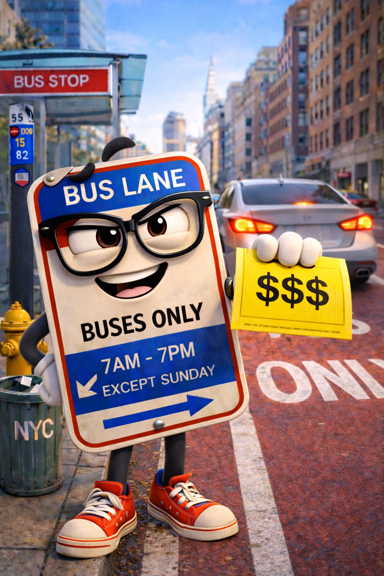
Parking in NYC Is No Longer About Where — It’s About When
For decades, parking strategy revolved around location.
If you knew the block, the signs, and the routine, you felt safe.
That logic is breaking.
Today, a single curb can change status:
Between deliveries
Between ride-hail pickups
Between enforcement rotations
Between the moment you walk away and the moment you come back
What matters now isn’t whether parking was allowed — but whether it’s about to change.
This is why experienced NYC drivers — the ones who “know the rules” — are still getting caught off guard.
The rules aren’t static anymore.
They’re scheduled, dynamic, and enforced with precision.
This Isn’t Speculation — It’s Already in the News
This shift toward real-time curb awareness isn’t theoretical.
It’s already being tracked in public reporting.
Recent coverage highlights drivers beginning to rely on departure signals, timing cues, and real-time curb context instead of memory and habit:
NYC drivers use new app to share parking departures and reduce circling
https://www.prlog.org/13117753-nyc-drivers-use-new-app-to-share-parking-departures-and-reduce-circling.htmlReal-time curb signals and parking awareness reach NYC drivers
https://www.pr.com/press-release/956739Curb AI Is Starting to Read and Alert Drivers to NYC Parking Signs (EIN Presswire)
https://www.einpresswire.com/article/780650308/curb-ai-is-starting-to-read-and-alert-drivers-to-nyc-parking-signs
The story isn’t about “finding parking faster.”
It’s about timing arrivals and exits correctly — before the curb flips.
What Drivers Who Are Staying Ahead Are Doing Right Now
Across NYC, a quiet behavioral divide is forming.
Drivers who are adapting are:
Checking curb conditions before stopping
Watching for when a space is about to open
Paying attention to rule changes, not just signs
Treating parking like traffic — dynamic, not fixed
They don’t look more cautious.
They just look less surprised.
Drivers who delay?
They’re still relying on memory — and feeling the difference.
Why This Feels Sudden (But Isn’t)
NYC parking didn’t suddenly become unfair.
It became:
More time-dependent
More tightly scheduled
More actively enforced
The curb now behaves like a system.
Drivers who adapt feel calm.
Drivers who don’t feel unlucky.
That’s the real shift.
Why Maps and Navigation Apps Aren’t Enough Anymore
Navigation tools answer:
Where to go
How to get there
They don’t answer:
What the curb will allow while you’re gone
Whether staying is riskier than moving
If a rule is about to change before enforcement begins
That gap — between arrival and enforcement — is where most problems now happen.
🛒 Recommended Driver Gear
The New Line Forming on NYC Streets
Right now, NYC drivers fall into two groups:
Drivers who adapt to real-time curb behavior
Check timing, not just location
Adjust before rules flip
Stay ahead of enforcement
Drivers who don’t
Rely on habit
Trust memory
Get surprised
Same city. Very different outcomes.
This Is Not a Future Trend
The curb is already adopting technology.
Drivers who recognize that early are already parking differently.
Drivers who delay are already feeling the shift.
This isn’t about being perfect. It’s about being current.
The Bottom Line
NYC parking is changing faster than drivers think.
The advantage now isn’t experience — it’s awareness at the right moment.
If you drive in New York City, this shift is already affecting you.
Ask Before You Park.
Ready to stop guessing?
You don’t need more apps.
You need better signals.
Spotlink helps people understand what’s happening on the street — and lets everyday driving moments add up.
👉 Try Spotlink
👉 Ask Before You Park
FAQ
Can Spotlink tell me if parking is legal right now?
Spotlink helps drivers understand curb and parking conditions faster, but drivers should always confirm posted signs and local rules before leaving a vehicle.
Can Spotlink help reduce parking tickets?
Spotlink is designed to reduce uncertainty by helping drivers check curb rules, timing, and ticket-risk situations before they park.
Check before you park
Before you leave your car, use Spotlink to check curb rules, timing, and ticket-risk situations in NYC.
Explore CurbAI, Ticket Guard, or start from the Spotlink homepage.
Driver check before parking
What it means
The practical question is whether the curb rule, timing, and street context still allow the driver to stop, wait, or park at that exact moment.
When the rule applies
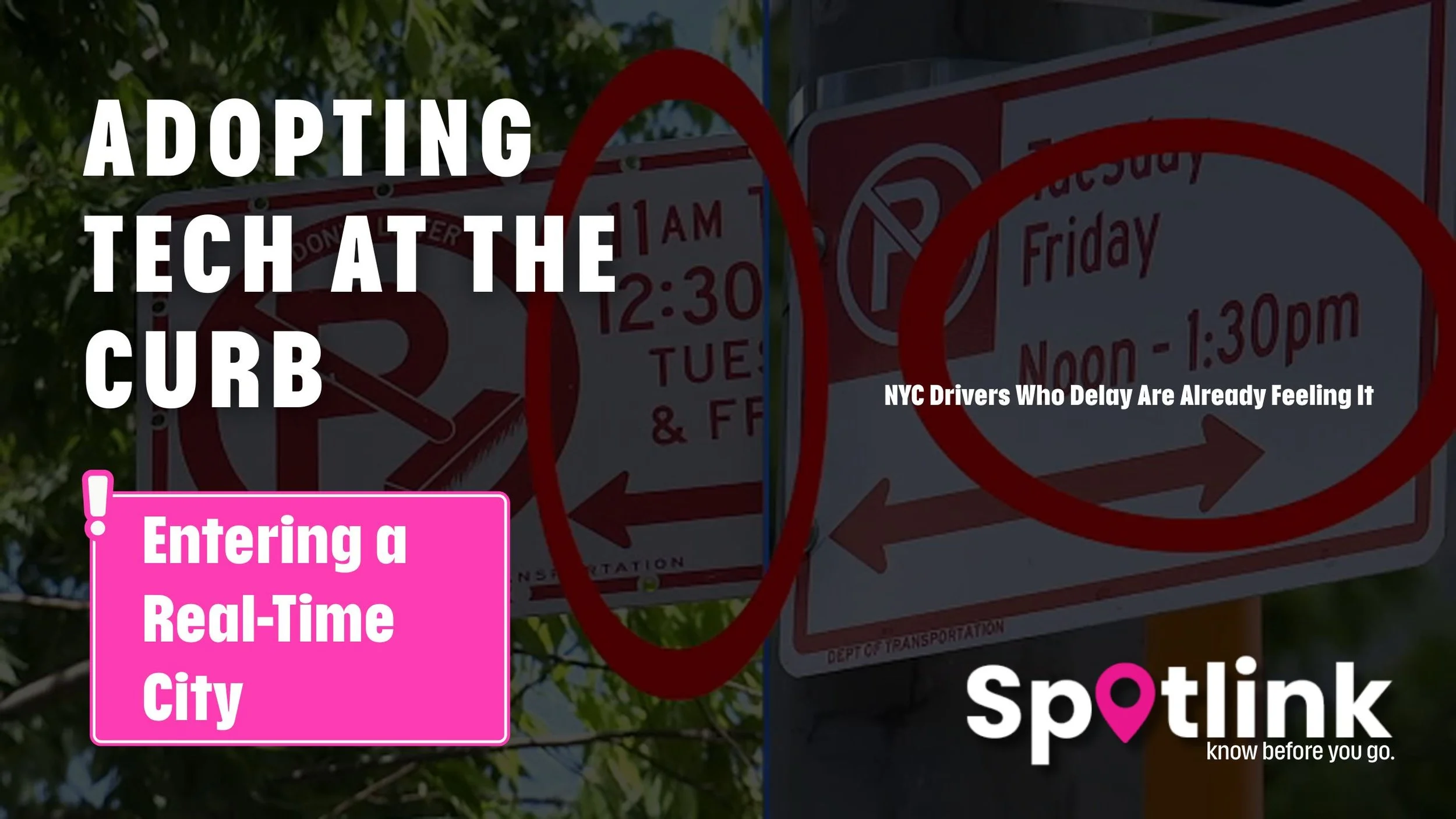
Check the posted days and hours, the side of the street controlled by the sign, and whether a temporary notice or nearby restriction changes the normal rule.
Common mistake
The common mistake is trusting memory, another parked car, or a quick errand instead of reading the current block conditions.
Quick rule
If the sign, arrow, time window, or curb context is unclear, treat the space as risky until you verify the rule.
What to check
The exact sign and arrow that control the space.
The day, hour, vehicle type, and whether stopping, standing, loading, or parking is allowed.
Hydrants, bus stops, driveways, loading zones, meters, bike lanes, and temporary notices nearby.